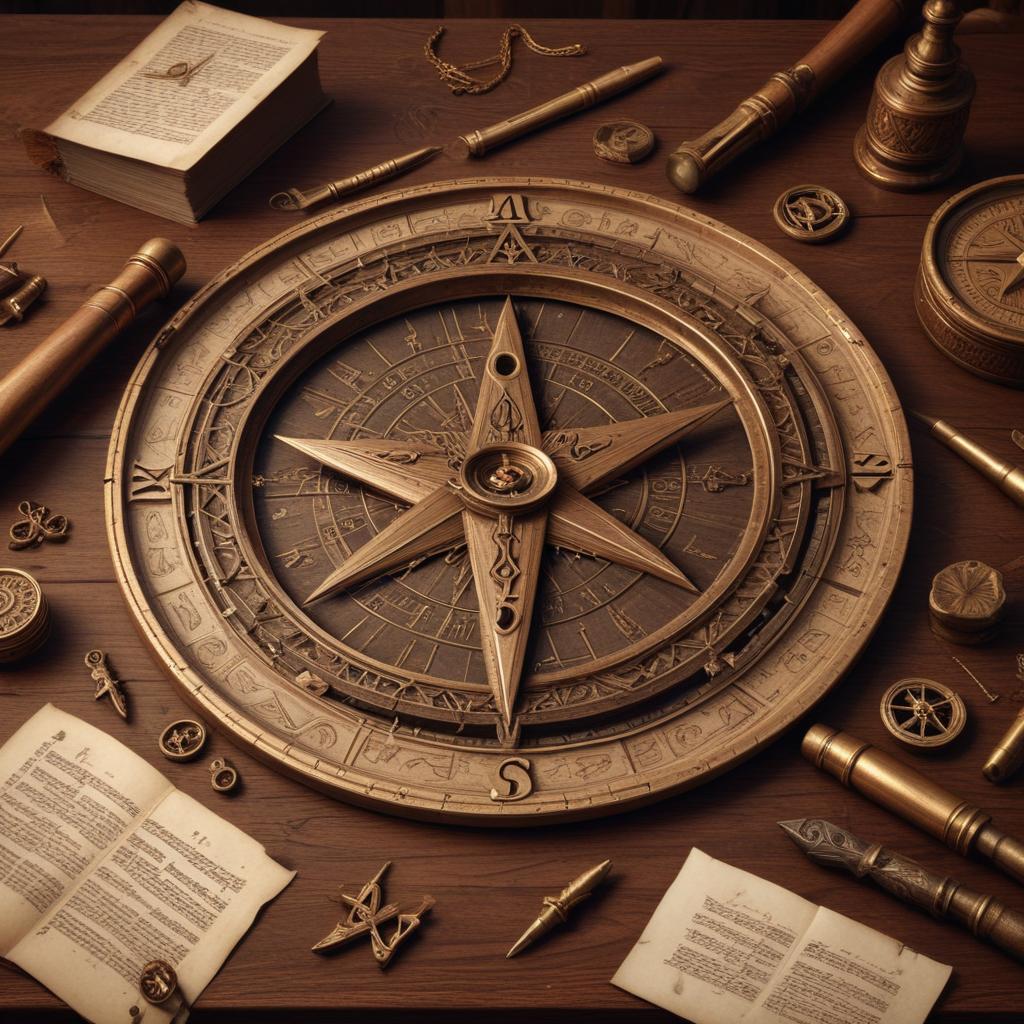
Origins of Masonic Art
- Medieval Stonemason Guilds: The origins of Masonic art are deeply rooted in the medieval stonemason guilds. These guilds used symbolic tools and architectural motifs as a form of visual language, which laid the foundation for what would become Masonic symbolism. The craftsmanship of these artisans was not only functional but also highly symbolic, representing moral and ethical lessons.
- Early Masonic Symbolism: Masonic art began to adopt symbols such as the square, compass, and level, each imbued with specific meanings tied to the virtues and knowledge sought by Freemasons. These symbols were often depicted in carvings, drawings, and architectural elements, emphasizing the link between craft and philosophy.
- Freemasonry History Influence: As Freemasonry evolved from operative stonemasonry to a more speculative and philosophical society, its art reflected this change. The history of Freemasonry infused the art with allegorical elements, blending historical motifs with more esoteric themes related to enlightenment, morality, and the journey of the self.
- Initial Ritualistic Depictions: Early Masonic art also focused on illustrating rituals and ceremonies critical to the fraternity’s practices. These ritualistic depictions served as educational tools, conveying complex symbolic meanings through visual storytelling, helping members memorize and internalize rites of passage.
- Symbolic Roots and Meaning: The foundations of Masonic art are inseparable from its symbolic roots. Each artistic element within early Masonic works served as a metaphor for spiritual and ethical growth, reflecting the guilds’ blend of practical skill and mystical knowledge, thus enriching the cultural heritage of freemasonry.
Medieval Influences on Masonic Symbols
The rich heritage of medieval art profoundly shaped Masonic symbols, reflecting the deep historical symbolism embedded within the craft. Medieval stonemasons, who were master builders of cathedrals and castles, belonged to guilds that preserved and transmitted artistic traditions and technical knowledge. These guild traditions form the cornerstone of many Masonic symbols, which often draw on the geometric and architectural motifs prevalent in medieval art.
Guilds during the medieval period were not just professional associations but also centers of learning and moral teachings. Their members used symbolic imagery linked to their craft as a means of communication and instruction. This symbolism was later adopted and adapted by Freemasonry, where it serves to convey moral and philosophical lessons. Tools like the square and compass, as well as themes like the building of temples, all trace their roots back to the practices and symbolism of these medieval stonemasons.
Moreover, the artistic styles of medieval stonemasons influence Masonic art styles, blending Gothic and Romanesque elements seen in intricate stone carvings and stained glass. This fusion enriches Masonic ritualistic objects and regalia with layers of meaning that echo the guilds’ focus on craftsmanship and moral virtue. Thus, medieval art and guild traditions remain a vital source of inspiration for the symbolic language expressed in Freemasonry today.
Transition from Guild to Freemasonry
The freemasonry evolution marks a significant historical transition from the traditional operative stonemason guilds to the more symbolic and speculative Freemasonry we recognize today. Originally, guilds were practical organizations of skilled craftsmen responsible for the construction of cathedrals and castles, where art and symbolism were grounded in the tools and practices of stonemasonry. These guilds emphasized mastery of craft, apprenticeship, and the transmission of practical knowledge. However, as the demand for such large-scale construction projects declined, the guilds began evolving into speculative societies focused less on physical stonemasonry and more on moral and philosophical teachings.
This guild transformation birthed a new form of masonic development characterized by rich symbolism and allegorical art, which extended beyond the literal use of stonemason tools. The lodge, once a place of manual labor, became a venue for the study of moral philosophy, ethics, and spiritual reflection, expressed through intricate symbols and artistic motifs. This shift profoundly impacted masonic art, integrating a broader spectrum of cultural and esoteric symbolism drawn from various historical and intellectual traditions. As a result, the artwork and iconography within Freemasonry became a unique blend of craft heritage and intellectual symbolism.
The historical transition from guild to Freemasonry thus represents a fusion of tangible craft skills and abstract philosophical principles. This evolution not only preserved many artistic elements from operative stonemasonry but also transformed them into powerful symbols of enlightenment and fraternity, reflecting the broader purposes and values of speculative Freemasonry.
The Golden Age of Masonic Art
The 18th century marked a flourishing period for Masonic art, often regarded as its Golden Age. This era witnessed significant stylistic developments in masonic art styles, deeply influenced by the broader intellectual movement known as the Enlightenment. Artists and craftsmen of this time skillfully incorporated rich symbolism and intricate masonic imagery, reflecting the philosophical ideals that shaped the century.
- Integration of Enlightenment Symbolism: Masonic art during the 18th century embraced the principles of reason, science, and progress. This Enlightenment symbolism was manifested in the use of light, geometric shapes, and allegorical figures that represented knowledge, morality, and the quest for truth.
- Evolution of Artistic Styles: The period showed an evolution from earlier, simpler designs into more elaborate and sophisticated artistic expressions. Baroque influences softened into Rococo elegance, while Neoclassicism introduced order, symmetry, and clarity to masonic motifs, enhancing both the visual appeal and symbolic depth.
- Expansion of Masonic Imagery: Symbols such as the square and compass, the all-seeing eye, and pillars became more widespread and standardized. These images were intricately detailed and often embedded in ritual objects, aprons, and architectural designs, making Masonic art a unique visual language.
- Patronage and Craftsmanship: The rising status of Masonic lodges during the 18th century led to increased patronage of artists and craftsmen. Skilled artisans produced exquisite works ranging from paintings and engravings to elaborate furniture and stained glass, reflecting both the aesthetic and moral values of Freemasonry.
- Influence on Broader Artistic Movements: The ideals of the Enlightenment and Masonic symbolism influenced not only Masonic art but also permeated other contemporary artistic movements. This cross-pollination helped spread Masonic themes beyond lodges into public and private art collections across Europe.
Overall, the 18th century established a rich legacy for Masonic art, combining philosophical ideals with artistic innovation. This Golden Age remains a pivotal reference point for understanding the evolution of masonic art styles and the enduring power of Enlightenment symbolism in shaping visual culture.
Artistic Styles and Techniques
During the Golden Age of Masonic art, the 18th century art scene heavily influenced the popular styles and techniques in Masonic craftsmanship. Artists and craftsmen embraced a refined aesthetic characterized by intricate engraving techniques that showcased their exceptional skill and attention to detail. These engravings were often executed on precious metals, wood panels, and parchment, materials chosen for their durability and capacity to hold fine detail.
Symbolic motifs played a central role in Masonic artwork, weaving layers of meaning into the visual narratives. Common symbols included compasses, squares, pillars, and all-seeing eyes, each rendered with meticulous precision to convey deeper esoteric messages. The intricate line work and shading typical of engraving techniques allowed these motifs to stand out vividly, imbuing the pieces with an air of mystery and reverence.
The artistic style of this period combined elements of Baroque and Rococo, with ornate flourishes and elegant curves that enhanced the spiritual and philosophical themes of Freemasonry. The work demonstrated not only technical prowess but also a deep intellectual engagement with symbolism, making each piece a unique artifact of 18th century masonic craftsmanship. This period remains celebrated for its blend of artistic excellence and meaningful iconography.
Impact of Enlightenment on Masonic Imagery
The Enlightenment, a philosophical movement emphasizing reason, science, and individualism, deeply influenced Masonic symbolism and artistic expression. Masonic art, known for its rich symbolic meaning, absorbed Enlightenment ideals by incorporating themes that reflect human progress, knowledge, and the search for truth. This transformation marked a shift from purely mystical representations to more philosophical art that invites contemplation on reason and morality.
Central to Enlightenment thinking was the belief in enlightenment itself as a metaphor for intellectual awakening and liberation from ignorance. Masonic imagery adopted this concept by featuring light as a dominant symbol, representing wisdom and clarity. Symbols such as the all-seeing eye, compasses, and squares evolved in their interpretations—signifying not only tools of the craft but also instruments of moral and intellectual discipline.
Furthermore, the Enlightenment’s emphasis on universal principles and natural law found reflection in the geometric and architectural motifs prevalent in Masonic art. These elements symbolize harmony, order, and the rational structure of the universe, aligning with philosophical art ideals. The symbolic meaning behind these images encourages members to pursue knowledge, ethical conduct, and self-improvement, echoing the broader Enlightenment pursuit of human betterment through reason.
Modern Interpretations and Legacy
Modern Masonic art reflects a fascinating blend of tradition and innovation, where contemporary symbolism merges with age-old motifs to create works that resonate in today’s world. This artistic evolution demonstrates how the Masonic influence today continues to inspire creators who seek to reinterpret the rich visual language of Freemasonry in ways that speak to contemporary audiences.
Contemporary artists draw from the established iconography of Masonic art—such as the square and compass, the all-seeing eye, and the pillars of wisdom—in order to craft pieces that highlight enduring philosophical and symbolic themes while also addressing modern concerns and aesthetics. These adaptations are not mere replicas but serve as a dialogue between the past and present, inviting viewers to explore the layered meanings embedded in these symbols through a new lens.
The lasting artistic legacy of Masonic art is evident in its widespread cultural imprint, influencing not just the art world but also architecture, design, and popular culture. As Masonic symbols find their way into diverse media and styles, they serve as a connective thread that links contemporary creators to a historical tradition rooted in enlightenment ideals and moral reflection. This continuity helps preserve the relevance of Masonry’s symbolic system in a rapidly changing world.
Moreover, modern Masonic art often challenges viewers to reconsider preconceived notions about the fraternity by emphasizing themes of unity, knowledge, and personal growth in innovative and sometimes abstract forms. The artistic legacy left by Freemasonry provides fertile ground for experimentation, allowing artists to explore new materials, digital formats, and installation art while maintaining a dialogue with the symbolic heritage that defines Masonic traditions.
In summary, the evolution of Masonic art into the modern era underscores its enduring significance and adaptability. Through contemporary symbolism and creative reinterpretations, modern Masonic artists ensure that the legacy of their craft remains a vital part of cultural and artistic discourse, bridging the historical past with present and future inspirations.
Contemporary Masonic Art Forms
Contemporary Masonic art embraces a dynamic range of modern symbolism and new media in freemasonry, reflecting an ongoing art evolution that bridges traditional and innovative expressions. Today, digital masonic art plays a pivotal role, enabling artists and Masonic lodges to explore symbolism through immersive and interactive platforms that were previously unimaginable. These digital creations often incorporate classic Masonic icons, such as the square and compasses, with fresh visual techniques to engage a broader and younger audience while maintaining the deep-rooted meanings embedded in Masonic tradition.
New media in freemasonry also includes virtual reality experiences, 3D rendering, and multimedia presentations that reimagine the symbolic narratives and philosophical messages of Freemasonry. This evolution of form does not diminish the significance of the symbols but rather opens new avenues for interpretation and connection. By integrating modern technology, Masonic art today serves as a bridge, connecting the past with the present and future, preserving the essence of Masonic teachings while adapting to contemporary artistic languages.
Ultimately, the fusion of traditional symbolism with cutting-edge digital art exemplifies how Masonic art continues to evolve. This progression ensures that the visual language of Freemasonry remains relevant and compelling, inviting continuous reflection on its philosophical foundations through the lens of modern creativity and technological innovation.
Preservation and Influence in Popular Culture
Efforts in masonic art preservation have been pivotal in maintaining the rich symbolism and historical significance embedded within this unique artistic tradition. Dedicated organizations and scholars work tirelessly to conserve masonic artworks, ranging from intricate lodge decorations to ancient manuscripts and medals. Preservation not only safeguards these cultural treasures but also ensures that the legacy of Freemasonry remains accessible for future generations.
Beyond the confines of lodges and historical archives, masonic art exerts a notable cultural influence, permeating various facets of popular culture. Its symbols and motifs frequently appear in media representation, including films, television series, literature, and video games. These appearances often evoke mystery and intrigue, attracting audiences and fostering curiosity about the esoteric traditions of Freemasonry.
The incorporation of masonic art in popular culture not only entertains but also educates the public, subtly conveying themes of morality, fraternity, and enlightenment. This widespread media representation highlights how masonic imagery continues to inspire and shape artistic expression beyond its original context. Consequently, the preservation of masonic art plays a crucial role, enabling its ongoing cultural resonance and facilitating a deeper understanding of its historical and symbolic importance.

I have spent the past decade exploring the intersections of Freemasonry, art, and science, researching historic manuscripts and architectural symbolism. My work as a freelance writer and independent researcher allows me to share the rich history of knowledge that these traditions embody.