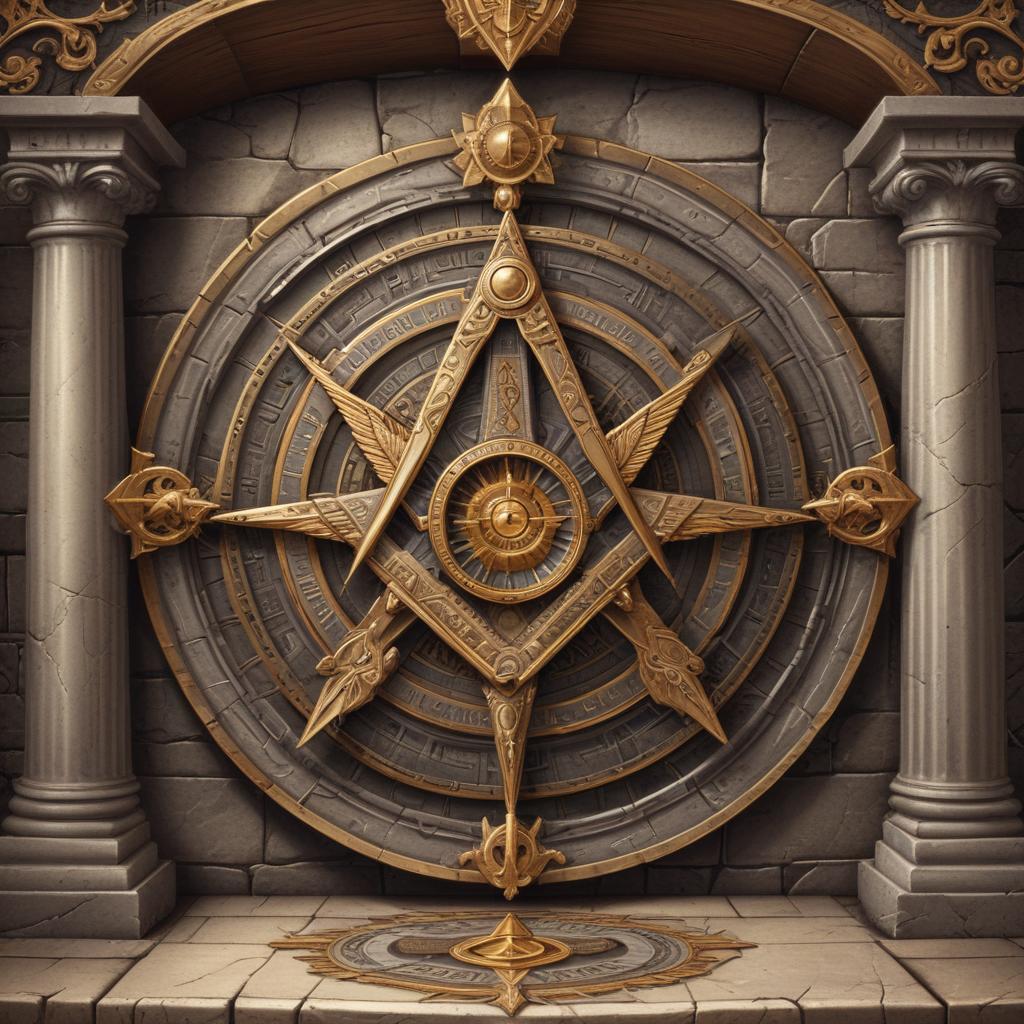
The compass, on the other hand, symbolizes restraint and the ability to set boundaries. It teaches Masons the allegory of self-control and wisdom, reminding them to circumscribe their desires and passions within due bounds to maintain balance in life. Together, the square and compass illustrate the harmony between action and thought, urging practitioners to act justly while maintaining personal discipline.
In Masonic art, this emblem often appears prominently, reinforcing its central role in conveying the fraternity’s core messages. The allegory meaning extends beyond the physical shapes to embody the spiritual journey of self-improvement and enlightenment. By contemplating the square and compass, members are inspired to pursue a balanced path that fosters honesty, fairness, and ethical conduct in both personal and communal life.
The Pillars and the Temple
In Masonic art, the pillars and temple imagery serve as profound symbols deeply woven into the fabric of Masonic lore. The pillars are not merely decorative elements but represent strength, stability, and the foundational virtues upon which the fraternity is built. These pillars often echo the renowned pillars of Solomon’s Temple, which hold significant allegorical weight in Freemasonry. Solomon’s Temple itself is a central motif in Masonic architecture and allegory, symbolizing the journey toward spiritual enlightenment and moral integrity.
The temple allegory uses the image of building and completing a sacred structure to represent the personal development of a Mason. As the pillars stand steadfast, they embody wisdom, strength, and beauty — qualities essential for maintaining balance and order in life and within the fraternity. These pillars also serve as metaphors for the dualities and complementary forces present in the universe, guiding Masons to strive for harmony and equilibrium.
Together, the pillars and temple imagery invite reflection on the importance of spiritual architecture in Masonic teachings. The temple is a symbol of the ideal state of a Mason’s inner self, constructed through discipline, knowledge, and ethical behavior. Thus, through these allegorical symbols, Masonic art conveys timeless messages about personal growth, moral fortitude, and the pursuit of enlightenment within the sacred tradition of its ancient heritage.
Light and Darkness Motifs
In Masonic art, the motifs of light and darkness serve as powerful allegories that represent the contrasting states of knowledge and ignorance. Light symbolizes enlightenment, wisdom, and the pursuit of truth, illuminating the path of the seeker who aspires to spiritual and intellectual growth. Conversely, darkness embodies ignorance, confusion, and the unknown, representing the barriers that obscure understanding and hinder the journey towards self-improvement. This duality of light and darkness is central to the spiritual symbolism found in Masonic imagery, reflecting the inner struggle between illumination and obscurity.
The use of light in Masonic art often involves radiant beams, glowing lamps, or open doors, all of which emphasize the revealing nature of knowledge. Darkness, on the other hand, may be depicted through shadows or obscured figures, signifying the mysteries yet to be uncovered and the challenges one must overcome. Together, these motifs encapsulate the essence of duality inherent in Masonic teachings, where the progression from ignorance to wisdom is not only a physical journey but a spiritual awakening.
Ultimately, the interplay between light and darkness in Masonic art is a reminder of the continual balance between opposing forces and the transformative power of enlightenment. It encourages initiates to emerge from the darkness of ignorance into the light of knowledge, reflecting the core values and objectives of Freemasonry.
Impact and Interpretation of Allegory in Modern Masonic Art
Allegory remains a powerful and enduring element in modern Masonic art, continuously shaping the way symbols and narratives are expressed within contemporary works. In today’s Masonic art, allegorical elements are still employed to communicate moral and philosophical lessons, often reflecting on timeless themes such as wisdom, virtue, and the pursuit of knowledge. This relevance of allegory underscores its integral role in bridging the historical traditions of Freemasonry with the evolving cultural and artistic sensibilities of the present day.
The interpretation of these allegories, however, has transformed significantly over time. While classical Masonic art often presented allegories in a more rigid and formal manner, contemporary artists experiment with diverse styles, techniques, and perspectives to offer fresh readings and deeper insights. This modern approach allows for an expanded cultural impact, engaging not only members of the fraternity but also a broader audience interested in symbolism, mystery, and esoteric traditions.
One notable shift in the interpretation of allegory within modern Masonic art is the inclusion of multicultural and global influences. As Freemasonry has grown internationally, its artistic expressions have absorbed various cultural elements, enriching allegorical representations and creating a more inclusive dialogue. This evolution encourages reinterpretation and ensures that allegory remains a living, dynamic language rather than a static set of images.
The cultural impact of allegory in contemporary Masonic art extends beyond the artwork itself. It fosters community reflection and dialogue on values central to Masonry and catalyzes personal transformation. Artists and viewers alike find in these allegories a mirror for introspection, an invitation to question, and a guide for ethical conduct. Through this ongoing relevance, allegory maintains its position as a vital tool for expression and education within the modern Masonic tradition.
In summary, the influence of allegory in modern Masonic art persists with enduring strength, adapting to changes in interpretation and cultural context while continuing to shape the visual and intellectual landscape of the fraternity. This adaptability ensures that the symbolic power of allegory remains pertinent, impactful, and deeply woven into the fabric of contemporary Masonic artistic expression.
Contemporary Artistic Expressions
Contemporary art in the realm of Masonic symbolism showcases a dynamic fusion of tradition and innovation. Modern Masonic artists employ allegory by reinterpreting historical symbols through fresh perspectives, allowing timeless themes to resonate within today’s cultural context. By integrating contemporary art styles—from abstract compositions to mixed media installations—these creators bring renewed vitality to the ancient narratives that have long defined Masonic expression.
Examples of such works include pieces that juxtapose classic emblems like the square and compass with modern design elements, reflecting updated philosophies while honoring Masonic heritage. This blend of old and new speaks to the adaptability of allegory, as Masonic artists strive to keep the symbolism relevant and engaging. Their use of modern symbolism extends beyond mere aesthetic change; it invites viewers to explore deeper meanings behind the allegories, facilitating personal interpretation.
Through these contemporary artistic expressions, Masonic allegory transcends its historical roots, demonstrating the enduring power of symbolic storytelling. Artists who continue to evolve traditional themes enable the fraternity’s visual language to flourish in the modern era, ensuring that the significance of Masonic art remains both recognizable and inspiring for new generations.
Challenges in Interpretation and Understanding
Interpreting allegories in Masonic art presents significant challenges due to the inherent symbolic complexity embedded within the artwork. These symbols often carry multiple layers of meaning, making it difficult to discern a single, definitive interpretation. The symbolic ambiguity can lead to varied understandings depending on the viewer’s knowledge, experience, and cultural background. This complexity is further compounded by cultural differences, as Masonic art has evolved across different regions and traditions, each contributing distinct meanings and nuances to its symbols.
Moreover, the interpretation challenges arise because many symbols in Masonic art are esoteric by nature, intended to convey teachings and principles that require specialized knowledge to fully comprehend. Without this context, observers might misinterpret the allegories or overlook subtle details that carry significant philosophical or moral messages. The layered and often cryptic nature of these allegories means that understanding them requires careful study and an appreciation for the historical and cultural contexts from which they emerged.
In essence, the difficulties in interpreting Masonic allegories highlight the importance of considering both the symbolic ambiguity and the cultural diversity influencing these artworks. Only through a holistic approach that acknowledges these factors can one begin to appreciate the depth and richness of the messages encoded within Masonic art.
Introduction to Allegory in Masonic Art
Allegory is a powerful literary and artistic device that uses symbols, characters, and narratives to convey deeper meanings beyond the literal interpretation. In the context of Masonic art, allegory serves as a fundamental tool for expressing the philosophical and moral teachings of freemasonry. Unlike straightforward representations, allegorical art invites viewers to look beyond the surface and engage with the rich layers of symbolism embedded in the imagery.
Masonic art is deeply rooted in the tradition of symbolism, where every element holds a specific significance corresponding to the values and principles upheld by the freemasonry fraternity. Allegory enables Masonic artists to embody complex concepts such as wisdom, strength, virtue, and the pursuit of enlightenment within visual forms. These symbolic representations act as a language of their own, communicating ideas that might otherwise be difficult to express through words alone.
The significance of allegory in Masonic art lies in its ability to serve as a bridge between the material and the spiritual realms. By using allegorical symbols, the art transcends mere decoration or illustration and becomes a medium for introspection and teaching. Members of the freemasonry are encouraged to interpret these symbols personally, reflecting on their own journey of self-improvement and moral development.
Moreover, symbolism in Masonic art is not static; it evolves and adapts with the passage of time while preserving its core meanings. This dynamic usage allows the allegorical art to remain relevant across generations, continually inspiring freemasons to seek greater knowledge and understanding. The layers of meaning embedded within the allegories ensure that the art is never fully exhausted, offering new insights upon each viewing.
In conclusion, allegory plays a crucial role in Masonic art by encapsulating the essence of freemasonry through symbolic imagery. It enriches the visual experience, encouraging deeper reflection on the values and teachings symbolized within the artwork. This intricate interplay of allegory and symbolism is what makes Masonic art a unique and enduring expression of philosophical and moral ideals.
Historical Background of Masonic Allegory
The use of allegory in Freemasonry has deep roots in the history of the fraternity, tracing back to its origins in the late medieval stonemason guilds. Allegory served as a crucial tool for imparting moral lessons and esoteric knowledge in a symbolic format that was accessible only to initiates. From these early beginnings, the allegorical tradition developed alongside the evolving practices of Freemasonry, blending philosophical, spiritual, and ethical themes into an intricate system of symbols and stories.
Historically, allegory has been an essential part of Masonic ritual and art, serving to communicate complex ideas about virtue, truth, and human nature. The allegorical tradition within Freemasonry reflects a broader cultural and intellectual movement that sought to simplify and preserve ancient wisdom through symbolic representation. Over time, this tradition evolved to include a rich array of artistic expressions, ranging from detailed engravings and paintings to architectural designs found in Masonic lodges and temples.
As Freemasonry expanded globally, its allegorical art adapted to include diverse cultural influences while maintaining core symbolic themes. This evolution highlights how allegory remains a dynamic and vital element in the history of Freemasonry, not only preserving historical values but also inspiring contemporary artistic interpretations. The continuous interplay between tradition and innovation in Masonic allegory underscores its enduring significance in the fraternity’s rich history.
Purpose and Function of Allegory in Masonic Symbolism
Masonic art extensively employs allegory as a powerful vehicle to convey complex moral lessons and spiritual meaning. The purpose of these allegories is not merely decorative but deeply symbolic, designed to guide initiates on a path of self-discovery and ethical living. Through symbolic images and narratives, Masonic allegory imparts timeless wisdom that transcends literal interpretation, unlocking layers of spiritual insight for those who seek it.
Allegory in Masonic symbolism serves as a bridge between the material world and the spiritual realm, enabling Freemasons to explore profound truths in a discreet yet impactful manner. This symbolic language operates on multiple levels, offering a personalized experience in which each member can derive unique understanding aligned with their own spiritual journey. The function of these allegories is to illuminate the virtues of brotherhood, integrity, and self-improvement, reinforcing the core ethics of the fraternity.
In essence, the purpose behind using allegory is to create a rich tapestry of symbols that invite reflection and meditation. This deepens the spiritual meaning embedded within Masonic rituals and art, making the teachings memorable and meaningful. Allegories inspire Masons to look beyond the surface, encouraging continual growth and enlightenment through symbolic storytelling that endures across generations.
Common Allegorical Symbols in Masonic Art
Masonic art is rich with symbols that convey deeper truths and teachings of the fraternity. These symbols, often termed as freemasonry symbols, serve as common allegories designed to communicate ethical and philosophical concepts to members and observers alike. Understanding these symbols is key to appreciating the intricate iconography that defines Masonic artistry.
One of the most prevalent symbols in Masonic art is the Square and Compasses. This iconic emblem represents moral integrity and the balance between the spiritual and worldly aspects of life. The square teaches members to “square their actions,” emphasizing honesty and virtue, while the compasses symbolize self-control and the importance of setting personal boundaries. Together, they form the essential iconography of freemasonry symbols that illustrate the core values of the order.
Another significant allegory is the All-Seeing Eye, often depicted within a radiating triangle. This symbol represents the watchful eye of the Supreme Being, reminding Masons that their deeds are always observed by a higher power. It reinforces the idea of accountability and encourages members to live with transparency and righteousness.
The Pillars of Boaz and Jachin, usually placed at the entrance of Masonic temples, are another common allegorical feature in Masonic art. These pillars symbolize strength and establishment, standing as metaphors for the entrance to wisdom and the support of a balanced life. They are representative of the gateway to knowledge and the steadfast principles that hold the fraternity together.
The Letter “G” is frequently present in the iconography of many Masonic pieces and holds multiple interpretations. It is commonly associated with both God and Geometry, underscoring the spiritual and scientific knowledge that freemasonry promotes. This symbol highlights the unity between faith and reason, a central theme in many Masonic teachings.
Lastly, the Mosaic Pavement, a checkerboard floor pattern, represents the duality of human existence — good and evil, light and darkness. It reminds members to navigate life’s challenges carefully, acknowledging both positives and negatives in their journey toward enlightenment.
These common allegories in Masonic art form a rich tapestry of symbols that convey profound lessons and historic wisdom. Through these freemasonry symbols and their layered iconography, the fraternity communicates its values and philosophies visually, enriching the cultural and spiritual experience of its members.
The Square and Compass
The square and compass are among the most recognized Masonic emblems, deeply embedded with allegorical meaning within Masonic art and teachings. This symbol is not merely decorative but serves as a profound representation of moral and ethical principles upheld by the fraternity. The square, with its right angles, signifies virtue, honesty, and the importance of living a life aligned with moral rectitude. It urges Masons to “square” their actions by the standard of virtue, encouraging integrity in all dealings.
The compass, on the other hand, symbolizes restraint and the ability to set boundaries. It teaches Masons the allegory of self-control and wisdom, reminding them to circumscribe their desires and passions within due bounds to maintain balance in life. Together, the square and compass illustrate the harmony between action and thought, urging practitioners to act justly while maintaining personal discipline.
In Masonic art, this emblem often appears prominently, reinforcing its central role in conveying the fraternity’s core messages. The allegory meaning extends beyond the physical shapes to embody the spiritual journey of self-improvement and enlightenment. By contemplating the square and compass, members are inspired to pursue a balanced path that fosters honesty, fairness, and ethical conduct in both personal and communal life.
The Pillars and the Temple
In Masonic art, the pillars and temple imagery serve as profound symbols deeply woven into the fabric of Masonic lore. The pillars are not merely decorative elements but represent strength, stability, and the foundational virtues upon which the fraternity is built. These pillars often echo the renowned pillars of Solomon’s Temple, which hold significant allegorical weight in Freemasonry. Solomon’s Temple itself is a central motif in Masonic architecture and allegory, symbolizing the journey toward spiritual enlightenment and moral integrity.
The temple allegory uses the image of building and completing a sacred structure to represent the personal development of a Mason. As the pillars stand steadfast, they embody wisdom, strength, and beauty — qualities essential for maintaining balance and order in life and within the fraternity. These pillars also serve as metaphors for the dualities and complementary forces present in the universe, guiding Masons to strive for harmony and equilibrium.
Together, the pillars and temple imagery invite reflection on the importance of spiritual architecture in Masonic teachings. The temple is a symbol of the ideal state of a Mason’s inner self, constructed through discipline, knowledge, and ethical behavior. Thus, through these allegorical symbols, Masonic art conveys timeless messages about personal growth, moral fortitude, and the pursuit of enlightenment within the sacred tradition of its ancient heritage.
Light and Darkness Motifs
In Masonic art, the motifs of light and darkness serve as powerful allegories that represent the contrasting states of knowledge and ignorance. Light symbolizes enlightenment, wisdom, and the pursuit of truth, illuminating the path of the seeker who aspires to spiritual and intellectual growth. Conversely, darkness embodies ignorance, confusion, and the unknown, representing the barriers that obscure understanding and hinder the journey towards self-improvement. This duality of light and darkness is central to the spiritual symbolism found in Masonic imagery, reflecting the inner struggle between illumination and obscurity.
The use of light in Masonic art often involves radiant beams, glowing lamps, or open doors, all of which emphasize the revealing nature of knowledge. Darkness, on the other hand, may be depicted through shadows or obscured figures, signifying the mysteries yet to be uncovered and the challenges one must overcome. Together, these motifs encapsulate the essence of duality inherent in Masonic teachings, where the progression from ignorance to wisdom is not only a physical journey but a spiritual awakening.
Ultimately, the interplay between light and darkness in Masonic art is a reminder of the continual balance between opposing forces and the transformative power of enlightenment. It encourages initiates to emerge from the darkness of ignorance into the light of knowledge, reflecting the core values and objectives of Freemasonry.
Impact and Interpretation of Allegory in Modern Masonic Art
Allegory remains a powerful and enduring element in modern Masonic art, continuously shaping the way symbols and narratives are expressed within contemporary works. In today’s Masonic art, allegorical elements are still employed to communicate moral and philosophical lessons, often reflecting on timeless themes such as wisdom, virtue, and the pursuit of knowledge. This relevance of allegory underscores its integral role in bridging the historical traditions of Freemasonry with the evolving cultural and artistic sensibilities of the present day.
The interpretation of these allegories, however, has transformed significantly over time. While classical Masonic art often presented allegories in a more rigid and formal manner, contemporary artists experiment with diverse styles, techniques, and perspectives to offer fresh readings and deeper insights. This modern approach allows for an expanded cultural impact, engaging not only members of the fraternity but also a broader audience interested in symbolism, mystery, and esoteric traditions.
One notable shift in the interpretation of allegory within modern Masonic art is the inclusion of multicultural and global influences. As Freemasonry has grown internationally, its artistic expressions have absorbed various cultural elements, enriching allegorical representations and creating a more inclusive dialogue. This evolution encourages reinterpretation and ensures that allegory remains a living, dynamic language rather than a static set of images.
The cultural impact of allegory in contemporary Masonic art extends beyond the artwork itself. It fosters community reflection and dialogue on values central to Masonry and catalyzes personal transformation. Artists and viewers alike find in these allegories a mirror for introspection, an invitation to question, and a guide for ethical conduct. Through this ongoing relevance, allegory maintains its position as a vital tool for expression and education within the modern Masonic tradition.
In summary, the influence of allegory in modern Masonic art persists with enduring strength, adapting to changes in interpretation and cultural context while continuing to shape the visual and intellectual landscape of the fraternity. This adaptability ensures that the symbolic power of allegory remains pertinent, impactful, and deeply woven into the fabric of contemporary Masonic artistic expression.
Contemporary Artistic Expressions
Contemporary art in the realm of Masonic symbolism showcases a dynamic fusion of tradition and innovation. Modern Masonic artists employ allegory by reinterpreting historical symbols through fresh perspectives, allowing timeless themes to resonate within today’s cultural context. By integrating contemporary art styles—from abstract compositions to mixed media installations—these creators bring renewed vitality to the ancient narratives that have long defined Masonic expression.
Examples of such works include pieces that juxtapose classic emblems like the square and compass with modern design elements, reflecting updated philosophies while honoring Masonic heritage. This blend of old and new speaks to the adaptability of allegory, as Masonic artists strive to keep the symbolism relevant and engaging. Their use of modern symbolism extends beyond mere aesthetic change; it invites viewers to explore deeper meanings behind the allegories, facilitating personal interpretation.
Through these contemporary artistic expressions, Masonic allegory transcends its historical roots, demonstrating the enduring power of symbolic storytelling. Artists who continue to evolve traditional themes enable the fraternity’s visual language to flourish in the modern era, ensuring that the significance of Masonic art remains both recognizable and inspiring for new generations.
Challenges in Interpretation and Understanding
Interpreting allegories in Masonic art presents significant challenges due to the inherent symbolic complexity embedded within the artwork. These symbols often carry multiple layers of meaning, making it difficult to discern a single, definitive interpretation. The symbolic ambiguity can lead to varied understandings depending on the viewer’s knowledge, experience, and cultural background. This complexity is further compounded by cultural differences, as Masonic art has evolved across different regions and traditions, each contributing distinct meanings and nuances to its symbols.
Moreover, the interpretation challenges arise because many symbols in Masonic art are esoteric by nature, intended to convey teachings and principles that require specialized knowledge to fully comprehend. Without this context, observers might misinterpret the allegories or overlook subtle details that carry significant philosophical or moral messages. The layered and often cryptic nature of these allegories means that understanding them requires careful study and an appreciation for the historical and cultural contexts from which they emerged.
In essence, the difficulties in interpreting Masonic allegories highlight the importance of considering both the symbolic ambiguity and the cultural diversity influencing these artworks. Only through a holistic approach that acknowledges these factors can one begin to appreciate the depth and richness of the messages encoded within Masonic art.

I have spent the past decade exploring the intersections of Freemasonry, art, and science, researching historic manuscripts and architectural symbolism. My work as a freelance writer and independent researcher allows me to share the rich history of knowledge that these traditions embody.