The Philosophical Foundations of Freemasonry and Nature
Freemasonry philosophy is deeply intertwined with the study and interpretation of nature. Within Masonic teachings, nature is not merely the physical world that surrounds us but a profound symbol reflecting the esoteric truths and moral principles that Freemasons seek to understand and embody. The symbolism of nature serves as a bridge connecting the external universe to the inner spiritual journey of the individual Mason.
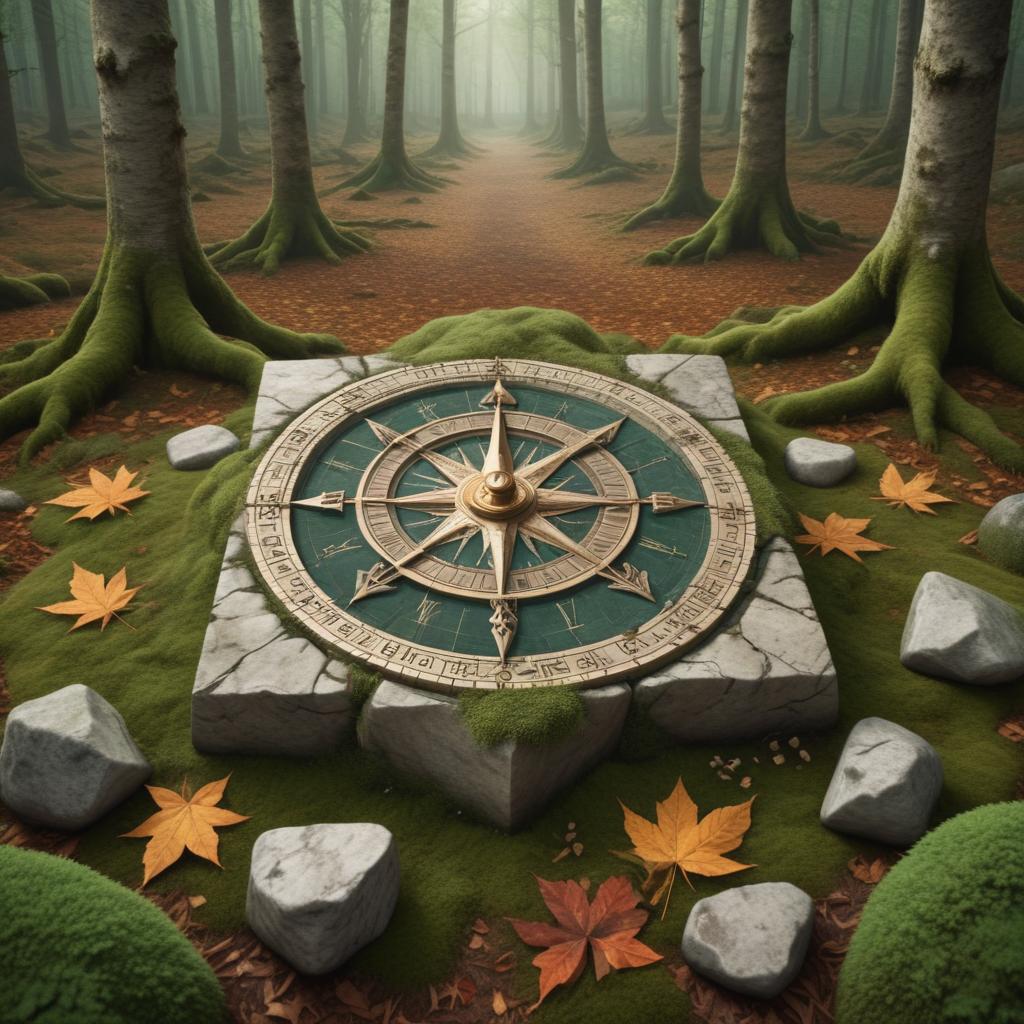
The natural world is rich in symbols and allegories that Freemasonry uses to convey its esoteric teachings. Elements such as the sun, moon, stars, and the cycles of the seasons symbolize enlightenment, wisdom, and the eternal progression of life and knowledge. Trees, stones, and architectural forms drawn from nature are not taken at face value; rather, they embody moral lessons about growth, strength, stability, and the building of a virtuous life.
At the core of Freemasonry’s philosophical interpretation of nature lies the belief that the universe is a grand, divine work—a ‘Great Architect’ whose laws and harmonies are reflected in every natural element. This perspective encourages Masons to study nature carefully, seeing in it a mirror of the divine order and a guide for their own personal development. By understanding nature’s symbolism, they gain insight into universal truths and the principles of balance, harmony, and justice.
Furthermore, the esoteric teachings within Freemasonry emphasize that the study of nature is also an inward journey. The natural symbols serve as metaphors for self-knowledge and spiritual awakening. For example, the rough ashlar and the perfect ashlar stones represent the transformation of the self from ignorance to knowledge, from chaos to order. This philosophical outlook encourages Masons to cultivate virtues such as patience, diligence, and humility by reflecting on nature’s processes and rhythms.
In essence, nature symbolism within Freemasonry acts as a language through which profound philosophical and spiritual lessons are communicated. This fusion of natural observation and esoteric wisdom forms a cornerstone of Freemasonry philosophy, making the study of nature a vital part of the Masonic journey toward enlightenment and moral betterment.
Nature as a Symbol in Masonic Rituals
Masonic rituals are deeply imbued with the use of nature symbols, reflecting the fraternity’s profound respect for the natural world and its wisdom. Natural elements such as the sun, moon, stars, trees, and stones are frequently featured in these ceremonies, serving as powerful symbols that convey essential moral and philosophical lessons. These nature symbols are not merely decorative; they hold significant ritual significance and represent ideals such as growth, enlightenment, strength, and the cyclical nature of life and death.
For example, the sun is often employed as a symbol of light and knowledge, illuminating the path for Freemasons to achieve personal and spiritual growth. The moon represents reflection and the subtle influence of the unseen, while stars symbolize guidance and the eternal pursuit of truth. Trees, especially the cedar or oak, denote endurance, resilience, and the steady growth of wisdom through time. Stones, particularly rough and polished ones, embody the craftsmanship and transformation inherent in the Masonic journey—reshaping the self from raw potential into refined virtue.
These natural elements in Masonic rituals create a rich tapestry of meaning that encourages members to contemplate their connection to the universe and to each other. They illustrate the harmony between mankind and nature, and the lessons that can be learned from observing natural processes. Through this symbolic use of nature, Masonic rituals deepen the members’ understanding of themselves and the world, reinforcing values of integrity, patience, and continual self-improvement.
The Role of Nature in Masonic Moral Teachings
In Freemasonry, nature serves as a profound source of moral teachings and ethical symbolism. Masonic morals are frequently intertwined with lessons drawn from the natural world, where every element—from the smallest leaf to the grandest mountain—embodies principles of integrity, balance, and growth. The Freemasons utilize nature lessons to illustrate virtues such as patience, humility, and perseverance, emphasizing how these qualities are essential for personal development and harmony within society.
Through symbolic references to natural objects like the oak tree or the flowing river, Freemasonry conveys a message that ethical behavior is not only beneficial but necessary for a fulfilling life. For instance, the oak’s deep roots symbolize stability and strength in character, while a river’s continual flow reflects adaptability and resilience. These symbols offer Masons a concrete way to internalize abstract moral concepts, making the teachings more accessible and memorable.
Moreover, the cyclical patterns observed in nature—the changing seasons, the cycle of life and renewal—highlight the importance of reflection and moral progression. By observing nature’s rhythms, Masons learn about the necessity of self-examination and the pursuit of continuous improvement. Thus, nature becomes a living textbook where ethical symbolism is not only taught but experienced, fostering a deeper connection between the individual, their community, and the universe at large.
Historical Intersections Between Freemasonry and Natural Sciences
The history of Freemasonry is richly intertwined with the development and study of natural sciences. Since its origins, Freemasonry has attracted intellectuals and scholars whose curiosity and dedication to understanding the natural world played a significant role in advancing scientific knowledge. The fraternity’s principles, emphasizing enlightenment, reason, and a deep respect for nature, created a unique environment where ideas about natural phenomena could be explored freely and systematically.
Throughout the 17th and 18th centuries, a period often referred to as the Age of Enlightenment, many prominent Masonic scholars actively contributed to the scientific disciplines. These individuals were often members of Masonic lodges, where discussions about geometry, astronomy, physics, and other natural sciences were common. The emphasis on geometry within Freemasonry, symbolized by tools such as the compass and square, naturally drew Masons toward mathematical and scientific rigor, which directly influenced their scientific pursuits.
Freemasonry’s openness to new knowledge fostered connections among early scientists, many of whom were Masonic members. The fraternity provided a network that encouraged collaboration and the exchange of ideas beyond national and religious boundaries. This spirit of inquiry and brotherhood helped bridge divides, allowing Masonic scholars to disseminate scientific findings more broadly, contributing to the collective advancement of natural sciences.
Moreover, the allegorical and symbolic nature of Masonic ritual often reflected themes from nature and the cosmos, reflecting a worldview that saw science and spirituality as complementary rather than opposing forces. This philosophical foundation supported Masonic scholars in pursuing the natural sciences not merely as a collection of facts, but as a deeper understanding of the universe’s underlying order and harmony.
In summary, the history of Freemasonry reveals a close relationship with the natural sciences, characterized by the contributions of Masonic scholars, the fraternity’s intellectual environment, and its symbolic emphasis on enlightenment and nature. Through these historical intersections, Freemasonry has played a subtle but notable role in the broader narrative of scientific advancement.
Prominent Freemasons and Their Contributions to Nature Studies
Several famous Freemasons have made significant scientific contributions that advanced the study of natural science. Their involvement in Freemasonry provided a network and intellectual environment that fostered inquiry into nature and its laws.
| Name | Contribution to Natural Science | Field |
|---|---|---|
| Benjamin Franklin | Conducted pioneering research on electricity and weather phenomena, contributing to meteorology and physics. | Physics and Meteorology |
| Sir Isaac Newton | Although his membership is debated, Newton’s foundational work in physics and mathematics deeply influenced scientific study of nature. | Physics and Mathematics |
| Carl Linnaeus | Developed the binomial nomenclature system, organizing natural science by classifying plants and animals. | Biology and Taxonomy |
| Alexander von Humboldt | Contributed to biogeography and ecological thinking through extensive exploration and scientific observation. | Ecology and Geography |
| Joseph Priestley | Discovered oxygen, significantly influencing chemistry and understanding of atmospheric gases. | Chemistry |
These notable Freemasons helped shape the natural sciences through their discoveries and studies, leaving a lasting legacy in the way we understand nature today.
Freemasonry’s Influence on Enlightenment Scientific Thought
During the Enlightenment period, Freemasonry played a distinctive role in shaping and promoting scientific thought. The values and principles embraced by Freemasons—such as reason, inquiry, and skepticism—were closely aligned with the burgeoning scientific ideas of the era. As a result, the Freemason influence created an intellectual environment where questioning established dogmas and pursuing empirical knowledge were encouraged. This culture of curiosity and open dialogue among Freemason networks helped disseminate scientific discoveries and foster collaboration across European societies.
Many prominent scientists and thinkers of the Enlightenment were Freemasons themselves, using lodges as safe spaces to exchange knowledge and debate theories beyond the constraints of traditional institutions. Freemasonry’s symbolic use of architecture and geometry also reinforced the scientific method by emphasizing observation, measurement, and the pursuit of universal truths. The fraternity’s commitment to education and moral improvement motivated its members to promote scientific advancements for the betterment of society, linking scientific progress with ethical responsibility.
Overall, the Freemason influence during the Enlightenment was pivotal in supporting scientific thought by cultivating a community that valued rationalism and intellectual freedom. This support helped lay the groundwork for the modern scientific revolution, bridging the gap between speculative philosophy and empirical science, and ensuring that scientific ideas could flourish within a broader societal framework.
Modern Perspectives on Freemasonry and the Study of Nature
In contemporary discussions surrounding modern Freemasonry, the study of nature continues to hold a significant place within Masonic teachings and philosophy. Unlike older interpretations that often framed nature within allegorical or symbolic confines, today’s Freemasonry embraces a broader, more integrative view, acknowledging nature not only as a metaphor but as a tangible source of wisdom and insight into the universe and ourselves.
Modern Freemasonry encourages its members to engage directly with the natural world as a means of personal growth and deeper understanding. This approach reflects contemporary views that highlight observation, respect, and stewardship of nature as essential aspects of Masonic practice. Nature is studied not purely for its external beauty or mystery but as a living classroom where principles such as harmony, balance, and interconnectedness are vividly exemplified.
Many Masonic lodges today actively incorporate nature study into their activities and educational programs, promoting an ethos of environmental awareness and responsibility. This includes discussions on sustainability, conservation, and the ethical treatment of the natural world, aligning Masonic values with modern ecological concerns. Freemasonry’s role in nature study thus evolves from purely symbolic interpretation to practical engagement, forging a link between ancient wisdom and contemporary ecological philosophy.
Contemporary views within Freemasonry also emphasize the spiritual dimension of nature, seeing it as a reflection of the divine order and a pathway to greater self-knowledge. Nature’s laws and cycles inspire lessons on resilience, patience, and transformation, concepts that hold personal and philosophical significance for Masons. This renewed focus underscores the importance of humility and reverence, as the natural world is viewed as a guide and teacher for both individual and communal growth.
In summary, modern Freemasonry’s relationship with nature study is dynamic and multifaceted, blending tradition with current ecological and philosophical insights. It advances a vision where nature is central to Masonic teachings—not only as a subject of study but also as a source of moral inspiration and practical guidance in the journey towards enlightenment.
Freemasonry’s Environmental Ethics
Modern Freemasonry places significant emphasis on environmental ethics as an integral part of its core values. Rooted in principles of respect, responsibility, and stewardship, Freemasonry advocates for a conscious and proactive approach toward nature. The fraternity encourages its members to recognize the interconnectedness of all life and the importance of preserving natural resources for future generations.
Environmental responsibility is seen not only as a moral duty but also as a reflection of Masonic values such as integrity, care, and community service. Many lodges actively participate in sustainability initiatives, ranging from tree planting and recycling programs to promoting awareness about climate change. These activities exemplify their commitment to fostering a harmonious relationship between humanity and the environment.
The respect for nature promoted by modern Freemasonry extends beyond symbolic gestures; it inspires a practical, ongoing dedication to reducing ecological footprints and supporting conservation efforts. By integrating these environmental ethics into their rituals and teachings, Freemasons aim to cultivate mindfulness and responsibility in all aspects of life. This approach not only enriches their spiritual journey but also contributes positively to the broader community and the planet.
Educational Programs Linking Freemasonry and Natural Philosophy
Freemasonry has long been associated with the pursuit of knowledge, and numerous educational programs within the fraternity actively promote an understanding of natural philosophy and the sciences. These initiatives aim to integrate Freemasonry education with lessons from natural philosophy, encouraging members to explore the fundamental principles of the natural world alongside traditional Masonic teachings. Lodges often organize lectures, seminars, and study groups focused on topics ranging from astronomy and geology to physics and biology, highlighting the connections between Masonic symbolism and scientific inquiry.
Some grand lodges have established formal educational programs or academies dedicated to deepening members’ knowledge of natural philosophy. These programs provide structured courses that explore how Freemasonry’s allegorical and philosophical frameworks intersect with scientific discoveries and the broader study of nature. By fostering curiosity and intellectual growth, these educational endeavors strengthen the bridge between Freemasonry education and the sciences, encouraging Masons to become lifelong learners and critical thinkers.
Moreover, collaborative partnerships with universities and scientific institutions have been formed in certain regions, further enhancing Freemasonry’s commitment to education in natural philosophy. These outreach efforts not only benefit members but also serve to enrich the wider community by promoting a shared appreciation for the wonders of nature and the role of science in understanding our world. Through such educational programs, Freemasonry continues to uphold its tradition of enlightenment and the study of the natural universe.

I have spent the past decade exploring the intersections of Freemasonry, art, and science, researching historic manuscripts and architectural symbolism. My work as a freelance writer and independent researcher allows me to share the rich history of knowledge that these traditions embody.