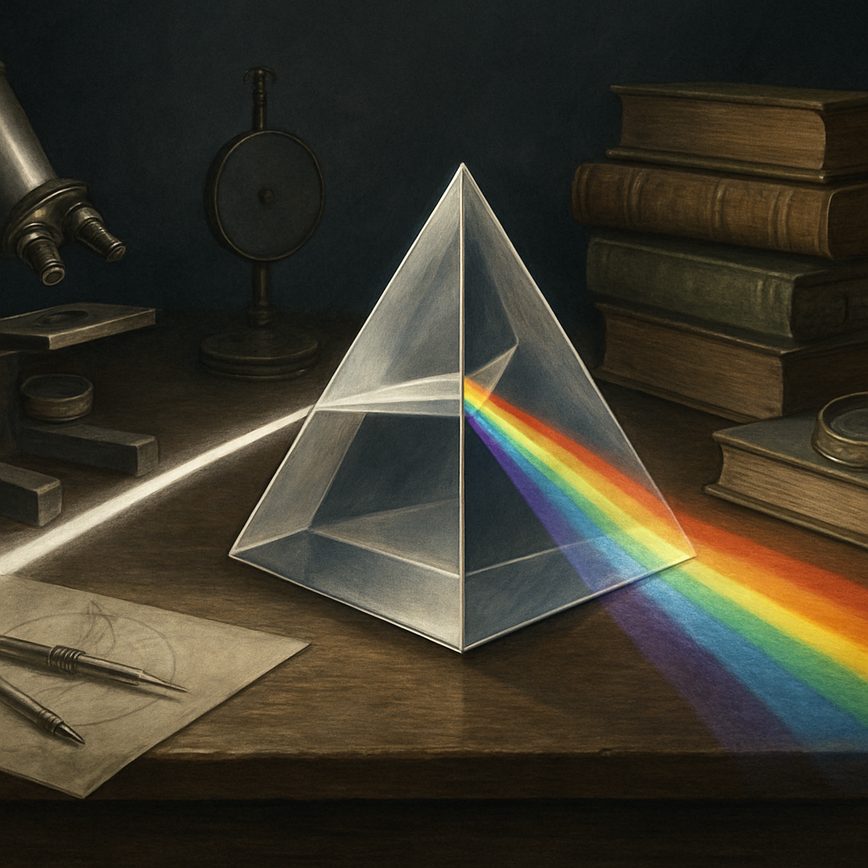
The Scientific Nature of Light
Light is a fundamental concept in the realm of physics, representing a fascinating and complex phenomenon that exhibits properties of both waves and particles. At its core, light is an electromagnetic wave, a form of energy that propagates through space carrying electromagnetic radiant energy. This wave nature of light is characterized by oscillating electric and magnetic fields that travel perpendicular to each other and to the direction of wave propagation.
An essential aspect of understanding light lies in its photon properties. Photons are discrete packets or quanta of light energy, and they behave as particles. Each photon carries energy proportional to the frequency of the light wave, described by the equation E = hf, where E is energy, h is Planck’s constant, and f is the frequency. This particle behavior of light explains phenomena such as the photoelectric effect, where light can eject electrons from a material, demonstrating that light energy is delivered in quantized units rather than a continuous wave.
Light’s place in the broader spectrum of electromagnetic radiation is crucial for scientific study. The electromagnetic spectrum encompasses all types of electromagnetic waves, ranging from very long radio waves to very short gamma rays. Visible light occupies a small section of this spectrum, distinguished by wavelengths roughly between 400 and 700 nanometers. These wavelengths determine the colors we perceive, with violet light at the shorter wavelength end and red light at the longer wavelength end.
The wavelength of light also influences its interaction with matter and its ability to transfer energy. For example, ultraviolet light has shorter wavelengths and more energy than visible light, enabling it to cause chemical reactions in certain substances. Infrared light, with longer wavelengths, primarily transfers heat energy. Understanding light wavelength is fundamental in applications like spectroscopy, where scientists analyze the interaction of light with materials to determine chemical composition and physical properties.
Overall, light physics integrates the wave-particle duality and the electromagnetic spectrum to explain the behavior and characteristics of light. This dual nature not only enriches our scientific comprehension but also underpins many technological advances, from lasers to telecommunications, all grounded in the intrinsic properties of light.
Physical Properties of Light
Light exhibits a range of physical properties that define its behavior and interaction with the environment. One of the fundamental characteristics of light is its speed. Commonly known as the speed of light, this value is approximately 299,792 kilometers per second in a vacuum, representing the fastest speed at which energy and information can travel. This high speed is crucial in many scientific applications, influencing how light transmits signals and transfers energy.
Another essential property of light is its wavelength, the distance between successive peaks of a light wave. Wavelength determines the color of visible light and is inversely related to frequency—the number of wave cycles that pass a given point per second. Different wavelengths correspond to different types of electromagnetic radiation, ranging from radio waves to gamma rays, with visible light occupying a small part of this spectrum.
The frequency of light directly influences its energy and how it interacts with matter. Higher frequency waves carry more energy and can cause more significant changes when they encounter atoms or molecules. For example, ultraviolet light with higher frequency than visible light can cause chemical reactions and fluorescence, while lower frequency infrared light primarily causes thermal effects.
Together, speed of light, wavelength, and frequency govern light behavior, including reflection, refraction, diffraction, and absorption. These interactions are fundamental to numerous natural phenomena and technologies such as lenses, lasers, and fiber optics, illustrating the profound impact these physical properties have on both science and artistic expression.
Light and Modern Science
Light plays a pivotal role in advancing modern scientific fields, particularly in quantum physics and optics. At the heart of quantum physics lies the concept of photons, the fundamental particles of light. Understanding the behavior of photons has led to revolutionary theories that explain the dual wave-particle nature of light, challenging classical physics paradigms. This breakthrough has not only deepened our comprehension of the microscopic world but also paved the way for emerging technologies such as quantum computing and secure quantum communication.
Experiments involving light have been central to scientific discovery. The famous double-slit experiment demonstrated the interference pattern of light, highlighting its wave-like properties and setting the stage for the quantum revolution. Additionally, experiments such as the photoelectric effect revealed how light can also behave as discrete particles, prompting Albert Einstein to propose the idea of quanta, for which he received the Nobel Prize. These light experiments have been foundational in confirming quantum theories and guiding scientific inquiry into the nature of reality.
In optics, light’s properties have been meticulously studied to develop a wide array of technologies, from simple lenses to complex laser systems. Optics research has enhanced everything from medical imaging to telecommunications, allowing precise control and manipulation of light. The study of light’s interaction with matter continues to inspire innovations in microscopy, fiber optics, and photonics, underscoring light’s indispensable role in both experimental science and practical applications. Through these advances, light remains a central symbol and tool in the quest for knowledge and progress.
Light as a Symbol in Art
Throughout art history, light symbolism has played a pivotal role in shaping the emotional and atmospheric depth of artworks. From the Renaissance to modern visual culture, artists have employed light not just as a physical phenomenon but as a powerful symbolic tool to convey meaning and evoke responses from the viewer. The interplay of light and shadow often serves as a metaphor for knowledge, divinity, and the contrast between good and evil.
In early Christian art, light symbolizes divine presence and spiritual enlightenment. Artists used beams of light or halos to emphasize the sacred nature of figures, subtly communicating themes of hope and salvation. This symbolic use of light extended through the Baroque period, where dramatic lighting techniques such as chiaroscuro heightened emotional intensity and sense of realism, drawing viewers into the depicted scene with a theatrical flair.
The symbolism of light in art is also evident in the Impressionist movement, where it was used to capture fleeting moments and the transient qualities of atmosphere. Artists like Monet leveraged natural light’s changing effects to explore perception and mood, allowing viewers to experience the emotional resonance of a particular time of day or season. This influence can be traced through to contemporary visual culture, where light continues to shape narrative and emotional undertones across various mediums, including photography, film, and digital art.
Artistic techniques employing light symbolism extend beyond painting. In sculpture, the manipulation of light through reflections and shadows can imbue a static piece with dynamic qualities. Likewise, installation art often uses light as a medium itself, transforming spaces and immersing audiences in emotionally charged environments that challenge perceptions and invite introspection.
Ultimately, the symbolic use of light connects deeply with human experience, bridging visual culture with universal themes of life, hope, and transformation. By understanding the history and techniques behind light symbolism, one gains insight into how artists across eras have communicated complex ideas and emotions with subtlety and profound impact.
Historical Use of Light in Art
Throughout the history of art, light has served as a powerful symbol and a crucial element in artistic techniques. During the Renaissance period, artists pioneered methods to manipulate light and shadow to enhance the emotional and spiritual impact of their works. One of the most notable techniques from this era is chiaroscuro, which uses strong contrasts between light and dark to create a sense of volume and three-dimensionality. Chiaroscuro not only added depth to paintings but also highlighted important subjects, drawing viewers’ attention precisely where artists intended.
Light in Renaissance art is frequently symbolic, embodying concepts such as divinity, knowledge, and purity. Artists would often use light to suggest the presence of the divine or to illuminate figures of religious significance, imbuing them with an ethereal glow. In addition to spiritual symbolism, light and shadow were employed to convey emotional states and psychological tension, enhancing the narrative within a painting. This interplay of light and shadow helped artists communicate complex ideas and feelings with subtlety and nuance.
Overall, the historical use of light in art is a multifaceted tradition where artistic technique and symbolism intertwine. The Renaissance mastery of chiaroscuro profoundly influenced subsequent generations, establishing light as a means to evoke the sublime, reveal hidden truths, and express the intangible through visual storytelling.
Contemporary Artistic Interpretations
In modern art, light has evolved into a versatile and compelling medium, transcending its traditional role to become a focal point of artistic expression. Contemporary artists harness light not only to illuminate but also to symbolize deeper themes, exploring its transient and intangible nature. Installation art, in particular, has embraced light as a dynamic element, transforming spaces through immersive experiences that engage viewers in a sensory dialogue.
Light sculptures represent a significant branch of this evolution, where light itself is shaped and manipulated to create three-dimensional forms that challenge perceptions of space and materiality. These sculptures often blend technology and artistry, employing LED lights, neon, and other modern lighting technologies to produce vibrant and interactive works. Such pieces invite interpretations centered on illumination as enlightenment, presence, and the ephemeral intersection between reality and perception.
Moreover, new media art extensively incorporates light to explore symbolism in contemporary contexts. Artists utilize projections, video mapping, and digital installations to navigate themes of identity, memory, and transformation. By integrating light as a symbolic element, these works evoke emotional responses and intellectual reflections, reinforcing the perpetual relevance of light as a motif in art. This modern approach both honors and expands the historic symbolism of light, making it a cornerstone of artistic innovation today.
Intersections of Scientific and Artistic Perspectives on Light
The relationship between science and art regarding light is a profound example of how two seemingly different disciplines intersect and enrich each other. Scientific advances in understanding light’s physical properties have deeply influenced artistic representation, while art continues to shape public perception and symbolic meanings of light. This dynamic interplay reveals the intricate ways in which aesthetic science bridges empirical knowledge with creative expression.
Scientific exploration of light has uncovered its nature as electromagnetic radiation, its behavior through reflection and refraction, and its essential role in vision and perception. These discoveries empower artists with new tools and insights, enabling them to manipulate light in innovative ways to achieve desired visual effects. Techniques such as chiaroscuro, impressionist brushwork capturing fleeting light, and the use of artificial light sources in contemporary installations demonstrate the direct influence of scientific knowledge on artistic methods and aesthetics.
Conversely, art contributes significantly to public understanding of light, transcending technical explanations to evoke emotional and symbolic meanings. Through varied cultural contexts, light has been portrayed as a symbol of knowledge, hope, divinity, and transformation. Artistic interpretations thus shape our collective conception of light beyond its physical properties, infusing it with metaphorical and cultural dimensions that resonate universally.
This reciprocal influence enhances light perception on multiple levels. Art provides a sensory and experiential understanding that complements scientific explanations, allowing an integrated appreciation of light’s effects on both the physical world and human consciousness. The study of aesthetic science thrives in this convergence, exploring how the perception of light can be both measured and felt, analyzed and interpreted.
Ultimately, the intersections of scientific and artistic perspectives reveal that light is not only a subject of study but also a powerful medium of expression. By intertwining empirical investigation with creative exploration, science and art together illuminate the profound symbolic meanings that light holds in our lives, continuously influencing how we see and interpret the world around us.
Perception of Light: From Physics to Aesthetics
The scientific principles of light fundamentally shape human vision, influencing how we perceive color and form in our environment. Light perception begins with the physics of light waves, which interact with objects and are then detected by the photoreceptors in the human eye. This process allows us to see a spectrum of colors resulting from varying wavelengths, a core concept in color theory. Our brain interprets these signals to construct the vibrant visual world that surrounds us.
Understanding light perception is crucial in creating aesthetic experiences in art. Artists manipulate light and color to evoke emotions, guide attention, and convey meanings beyond the literal depiction of forms. By applying the scientific knowledge of how light is perceived, artists can design compositions that resonate deeply with viewers, enhancing the overall aesthetic experience. For instance, the subtle gradations of light and shadow create a sense of depth, while contrasting colors can intensify visual impact.
Thus, the interplay between the physics of light and human vision bridges science and art, enriching our appreciation and emotional response to artistic works. This intersection reveals how the principles governing light perception are not only vital to understanding the natural world but also essential for crafting compelling visual aesthetics.
Symbolism Bridging Science and Art
Light has long served as a compelling symbolism bridging the realms of scientific inquiry and artistic expression. In science, light is understood as both a wave and a particle, fundamental to understanding the universe’s physical properties. This dual nature finds its echo in art, where light often symbolizes knowledge, enlightenment, and the ethereal connection between the material and the spiritual worlds. For example, in Renaissance paintings, light is used metaphorically to highlight divine presence and wisdom, reflecting cultural meanings that transcend mere visual aesthetics.
In the fusion of science and art, light becomes a metaphor that captures our quest for understanding and transcendence. The play of light in scientific imagery—such as visualizations of electromagnetic waves or photons—resonates deeply with artistic portrayals that use illumination to evoke emotions or ideas. This interplay showcases how light metaphorically embodies the bridge connecting objective scientific facts with subjective human experience.
Furthermore, light’s symbolism permeates diverse cultures, enriching its significance. In many traditions, light represents life, clarity, and hope, while in others, it denotes transformation and revelation. By examining examples where light functions as a central theme, we see how its cultural meanings infuse both scientific concepts and artistic narratives, creating a powerful dialogue between these disciplines. This fusion highlights light’s role not just as a physical phenomenon, but as a profound symbol in human creativity and understanding.

I have spent the past decade exploring the intersections of Freemasonry, art, and science, researching historic manuscripts and architectural symbolism. My work as a freelance writer and independent researcher allows me to share the rich history of knowledge that these traditions embody.