Introduction to Masonic Art
Masonic art traces its origins back to the early days of Freemasonry, an ancient fraternal organization known for its use of symbols and allegorical imagery. The essence of Masonic art lies in its ability to convey complex philosophical and moral concepts through visual means, making it an integral part of Freemasonry’s tradition and teachings.
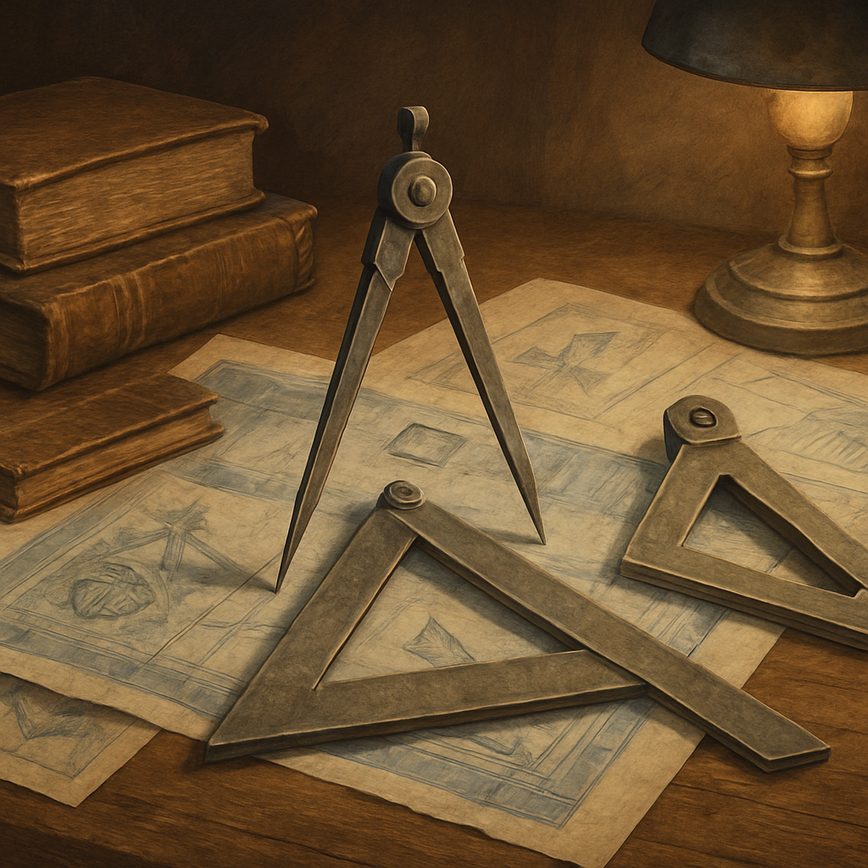
The significance of Masonic art extends beyond mere decoration; it serves as a visual language that encapsulates the core values and principles of Freemasonry. Symbols featured in Masonic art, such as the square and compasses, the all-seeing eye, and the pillars of Solomon’s Temple, are rich in meaning and represent concepts like morality, wisdom, and enlightenment. These symbols are not randomly chosen but are imbued with centuries of esoteric knowledge and cultural heritage.
Masonic imagery plays a pivotal role in ritualistic practices and the educational framework of the fraternity. The artworks and symbols are used within lodges to illustrate lessons about personal development, ethical behavior, and the pursuit of truth. Members often reflect on these images to deepen their understanding of Freemasonry’s spiritual and philosophical teachings.
Furthermore, Masonic art contributes to the unique identity of Freemasonry by visually linking members worldwide through shared iconography. This artistic tradition bridges time and geography, preserving the organization’s historical roots while continually inspiring new generations. In sum, the origins and significance of Masonic art lie in its symbolic power to communicate and uphold the enduring values of Freemasonry.
Historical Context of Masonic Symbols
The rich tapestry of historical symbolism embedded within Masonic traditions offers profound insight into the fraternity’s roots and evolution. Key Masonic symbols such as the square and compasses, the all-seeing eye, and the letter “G” carry meanings that reach back to ancient spiritual and architectural practices. These symbols have evolved over centuries, reflecting the growth and philosophical depth of the fraternity.
The origins of the square and compasses can be traced to the tools of medieval stonemasons, representing moral integrity and the balance between earthly and spiritual matters. The all-seeing eye, often associated with divine watchfulness, has origins in Egyptian and Christian symbolism, repurposed to signify enlightenment and knowledge within Masonic rituals. Meanwhile, the letter “G” is frequently interpreted as a symbol for both God and Geometry, underscoring the importance of the divine and mathematical principles in Masonic history.
Over time, the fraternity has preserved these symbols while adapting their interpretation in line with changing cultural and philosophical contexts. This evolution showcases not only the respect for tradition but also a dynamic approach to symbolism that has kept the fraternity relevant. Understanding the historical symbolism inherent in Masonic history allows members and observers alike to appreciate the deep meaning behind the icons that define the fraternity’s identity.
Common Themes in Masonic Artwork
Masonic art is rich with masonic themes that convey profound symbolic meanings through carefully chosen art motifs. One of the most recurrent themes is the representation of tools such as the square, compass, and level, which symbolize virtues like morality, balance, and equality. These motifs serve to remind members of the ethical guidelines and principles that underpin Masonic philosophy.
Another common theme is the use of architectural elements, including pillars and arches, which symbolize strength and stability. These symbols are intended to teach lessons about the construction of both physical and moral edifices, reflecting the Masons’ metaphor of life as a building project. Such imagery encourages self-improvement and the building of character.
Additionally, Masonic artwork often incorporates celestial bodies like the sun, moon, and stars. These elements represent enlightenment, knowledge, and the connection between the earthly and the divine. The symbolic meanings behind these motifs aim to inspire spiritual growth and a broader understanding of the universe among initiates.
Overall, the recurring themes in Masonic art are not random decorations but deliberate visual lessons designed to communicate moral and philosophical teachings. Through these symbolic messages, the artwork fosters reflection and a deeper appreciation of Masonic values, guiding members in their personal and communal journey.
Human Perception and Symbolism
Human perception plays a crucial role in how individuals engage with symbols, shaping the meanings they derive from these visual cues. Symbols function as powerful tools for communication that go beyond literal representation, invoking deeper layers of understanding through what is often termed cognitive symbolism. This form of symbolism taps into our innate ability to connect abstract ideas with concrete forms, allowing us to interpret complex concepts such as those embedded in Masonic art.
The process of symbolic interpretation is inherently subjective, influenced by personal experiences, cultural backgrounds, and cognitive frameworks. When viewers encounter Masonic art, their perception is filtered through an intricate mental system that assigns significance to the various signs, icons, and images presented. This mental decoding is not merely passive observation but an active engagement where the mind pieces together meaning from symbolic elements that often carry esoteric messages.
Masonic art is rich in symbolic motifs, each carefully chosen to communicate moral teachings, philosophical ideas, and historical traditions. Human perception’s sensitivity to pattern recognition and metaphorical thinking makes it particularly suited to grasp the layered meanings that these symbols intend to convey. The brain’s capacity to process symbolic information cognitively allows the observer to go beyond the surface and explore the symbolic language of Freemasonry.
Moreover, the interpretive experience of Masonic symbolism is dynamic; it evolves as individuals deepen their understanding or as cultural contexts shift. This dynamic interplay between symbol and perception exemplifies how cognitive symbolism operates not only as a static code but as a living dialogue between the art and its audience. Ultimately, human perception ensures that Masonic art remains a vibrant conduit for wisdom and insight, open to interpretation yet rooted in shared symbolic tradition.
Psychology Behind Symbol Recognition
Symbol recognition is a complex cognitive process rooted deeply in the psychology of perception. When individuals encounter symbols, their brain engages in visual cognition, transforming abstract shapes and patterns into meaningful concepts. This process depends on the brain’s ability to decode and interpret visual stimuli, which involves attention, memory, and prior knowledge. Human perception is influenced by psychological factors such as context, culture, and individual experiences, which shape how symbols are understood and responded to.
Understanding symbols requires more than just seeing; it demands recognizing patterns that the brain has learned to associate with certain meanings. The psychology of perception explains that recognition is facilitated by the brain’s pattern recognition system, which enables quick identification of familiar shapes even in varying conditions. This system works alongside memory retrieval to connect symbols with learned interpretations or emotions, enabling efficient communication without the need for explicit explanation.
Moreover, visual cognition incorporates processes like figure-ground segregation, where the symbol is distinguished from the background, allowing focused recognition. Emotional and cultural factors also modulate perception, where a symbol may evoke different meanings in different individuals. Hence, symbol recognition is not a passive act but an active cognitive endeavor influenced by multiple psychological dimensions, highlighting the intricate relationship between human cognition and symbolic art.
Emotional and Cultural Effects of Masonic Imagery
Masonic imagery is deeply intertwined with emotional response and cultural symbolism, shaping how viewers interpret its artistic elements. The emotional reaction elicited by these images often depends on personal experiences and the symbolic meanings attached to the motifs within specific cultural contexts. For instance, symbols like the square and compass may evoke a sense of order and morality in some cultures, while in others, they might be viewed as mysterious or secretive, influencing the depth of emotional engagement.
Cultural background plays a pivotal role in framing the perception of Masonic art. Different societies bring their own historical narratives and symbolic interpretations, which can either reinforce or challenge the intended messages of these images. This dynamic interaction between cultural lens and symbolism leads to varying interpretations, highlighting the multifaceted nature of Masonic imagery effects. Consequently, what may be a profound symbol of enlightenment and fraternity in one culture could be perceived quite differently in another, impacting the emotional response elicited.
Moreover, the emotional response to Masonic imagery is not static; it evolves as individuals and cultures interpret these symbols through personal and collective experiences. The layers of hidden meanings encourage viewers to explore beyond the surface, fostering a nuanced understanding influenced by both cultural symbolism and emotional perception. Thus, the effects of Masonic imagery are a complex interplay of emotions and cultural significance, demonstrating how deeply symbolic art can resonate across diverse audiences.
Interpreting Masonic Art Through Modern Lenses
Contemporary approaches to interpreting Masonic art increasingly embrace modern interpretation techniques, blending historical context with current cultural and intellectual frameworks. This shift in art analysis allows for a more nuanced appreciation of the complex symbolism embedded within Masonic imagery, offering fresh insights that resonate with today’s audiences. Researchers, historians, and enthusiasts now apply interdisciplinary methods, combining semiotics, psychology, and digital tools to decipher the layers of meaning often hidden behind symbolic elements.
Modern interpretation of Masonic art is not confined to traditional readings or solely academic perspectives. Contemporary viewers bring their unique worldviews and experiences to the art, influencing how Masonic symbolism today is comprehended and appreciated. This democratization of interpretation has expanded the dialogue beyond Masonic lodges into broader cultural and artistic spaces, encouraging new conversations around the values, philosophies, and esoteric teachings encapsulated in the artworks.
Advancements in technology have played a significant role in modern art analysis, enabling detailed examination of Masonic artifacts with tools like high-resolution imaging and 3D modeling. These methods uncover details that might have been overlooked previously, enhancing the understanding of the craftsmanship and intentional symbolism. Moreover, digital archives and virtual exhibitions have made Masonic art more accessible to the public, fostering wider engagement and reinterpretation by diverse audiences worldwide.
Today’s interpretation also considers the evolving social and political contexts influencing Masonic art’s creation and reception. Analysts explore how contemporary values—such as inclusivity, spirituality, and identity—interact with traditional Masonic themes, allowing the symbolism to be seen through a lens that balances reverence for history with relevance to current issues. This dynamic process enriches the discourse, ensuring that Masonic art remains a living, evolving form of expression.
Ultimately, the intersection of modern interpretation, innovative art analysis, and Masonic symbolism today highlights the adaptability and enduring significance of Masonic art. By applying contemporary perspectives, the layered meanings of these artworks continue to inspire reflection and dialogue, bridging past traditions with present-day understanding.
Artistic Techniques and Their Impact on Perception
Artistic techniques play a crucial role in shaping how viewers perceive Masonic art and its embedded symbolism. The Masonic art style is characterized by precise geometric forms, symbolic imagery, and carefully balanced compositions that guide the observer’s eye and evoke contemplation. The deliberate use of line, color, and contrast enhances the visual impact, making the intricate symbols more accessible and striking.
One key aspect is the use of symmetry and proportion, which aligns with Masonic ideals of harmony and balance. These elements create a sense of order and invite viewers to explore deeper layers of meaning. Moreover, the choice of muted or bold color palettes affects the emotional response, where softer tones may evoke mystery and introspection, while vivid colors emphasize power and enlightenment.
Texture and shading techniques add depth and realism that anchor abstract concepts in tangible visuals. This enhances symbolism clarity by preventing the imagery from becoming overly obscure or detached from human experience. Additionally, contrasts in light and shadow direct attention to focal points, underscoring essential symbols and their significance within the broader Masonic narrative.
Overall, the interplay of these art techniques not only contributes to the visual impact of Masonic art but also shapes how its philosophical messages are perceived and interpreted, ensuring that symbolism remains clear and resonant to both initiates and casual observers alike.
Contemporary Relevance of Masonic Symbols
In today’s rapidly evolving cultural and social landscape, Masonic symbols continue to hold significant relevance, though their meanings often adapt to modern contexts. Rooted deeply in the masonic tradition, these symbols originally conveyed specific moral and philosophical lessons designed to guide members. However, as society progresses, their interpretations expand, reflecting broader themes of enlightenment, unity, and personal growth that resonate universally.
The modern symbolism found within Masonic icons allows them to transcend their original esoteric frameworks and engage contemporary audiences in dialogue about identity, ethics, and community values. This dynamic relevance today is seen in the way these symbols are embraced not only within Masonic circles but also in artistic, architectural, and cultural expressions worldwide. They serve as metaphors for a quest for knowledge and self-improvement, ideals increasingly pertinent in an interconnected global society.
Moreover, the adaptation of Masonic symbols within current social contexts illustrates how tradition can blend with innovation. While maintaining their core meanings, these symbols are open to reinterpretation, embodying the evolving values and challenges of modern life, such as inclusivity and social responsibility. Thus, the enduring power of Masonic symbolism lies in its ability to remain both timeless and timely, reinforcing the masonic tradition’s ongoing impact on contemporary thought and culture.

I have spent the past decade exploring the intersections of Freemasonry, art, and science, researching historic manuscripts and architectural symbolism. My work as a freelance writer and independent researcher allows me to share the rich history of knowledge that these traditions embody.