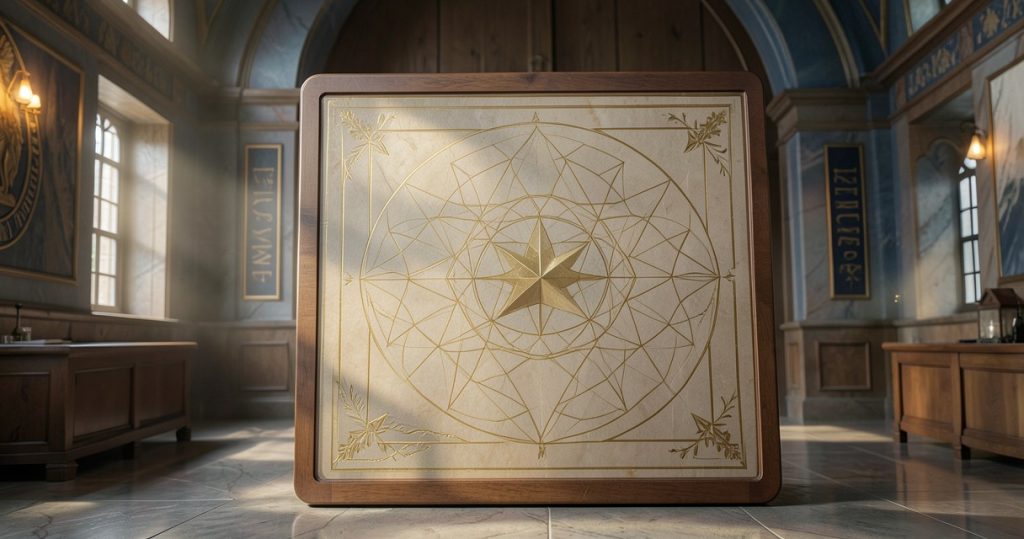
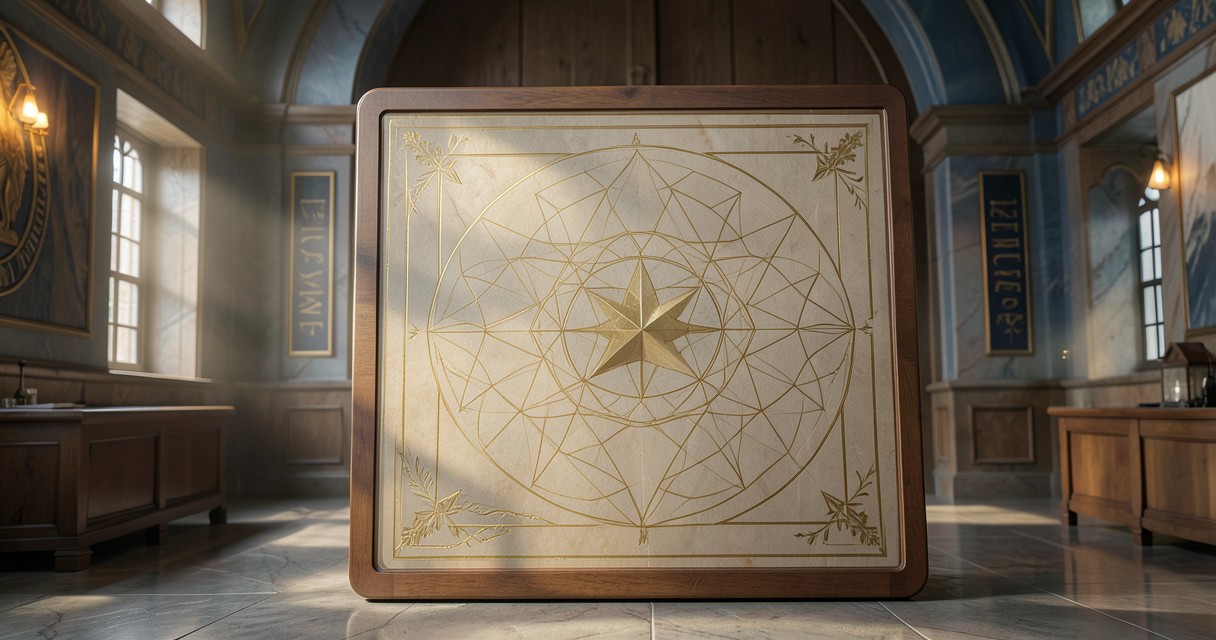
Masonic art is not merely decorative. It is a deliberate system of visual mathematics that encodes universal principles of harmony, balance, and human aspiration. From the precise geometry of lodge floor mosaics to the symbolic ratios embedded in aprons and tracing boards, proportion governs every line, angle, and interval. These ratios are not arbitrary. They reflect a tradition that stretches back to ancient Egypt and Greece, where architects and philosophers treated proportion as the bridge between material form and metaphysical truth. Within the context of “Art / Science,” Masonic art becomes a living laboratory where aesthetic intuition and quantitative rigor converge, offering a unique lens through which to examine the intersection of creativity and exactitude.
The Golden Ratio in Masonic Symbolism
The golden ratio, approximately 1.618, appears repeatedly in Masonic art, though often subtly. Lodge tracing boards, for instance, frequently employ rectangles whose sides adhere to this proportion, creating a visual rhythm that feels both natural and deliberate. The ratio is not limited to two-dimensional works. Architectural elements within Masonic temples, such as the placement of columns or the dimensions of ritual spaces, often reflect the same mathematical relationship. This is not coincidence. The golden ratio has long been associated with divine creation, a concept central to Masonic philosophy. When a tracing board or ceremonial apron incorporates this ratio, it does more than please the eye. It reinforces the idea that beauty and order are manifestations of a deeper, universal law.
Historical examples abound. The tracing board of the Entered Apprentice degree, for example, often features a rectangle whose height and width approximate the golden ratio. The same ratio can be observed in the spacing of symbolic elements, such as the sun and moon, which are positioned to create a harmonious balance. These choices are not merely aesthetic. They serve as visual reminders of the Masonic belief in the interconnectedness of all things, a principle that aligns closely with the scientific pursuit of underlying patterns in nature. The golden ratio, in this context, becomes a tool for both artistic expression and philosophical inquiry.
Sacred Geometry and the Square and Compass
The square and compass, perhaps the most recognizable symbols in Freemasonry, are not only moral emblems but also geometric instruments. Their proportions are carefully calibrated to reflect sacred geometry, a system of mathematical relationships that underpins much of Masonic art. The square, with its 90-degree angles, represents the material world, while the compass, with its ability to draw perfect circles, symbolizes the spiritual realm. When combined, these tools create a dynamic interplay of form that embodies the Masonic ideal of balancing the tangible and the transcendent. The precise angles and arcs produced by the square and compass are not arbitrary. They follow mathematical principles that have been studied and refined over centuries.
One of the most striking examples of this geometry can be found in the layout of Masonic lodge rooms. The floor often features a mosaic pavement, a checkerboard pattern of black and white tiles that symbolizes the duality of existence. The dimensions of these tiles are not random. They are designed to create a grid that adheres to specific proportional relationships, often based on the square root of two or the golden ratio. This grid serves as the foundation for the placement of other symbolic elements, such as the altar or the stations of the officers. The result is a space that is both functional and deeply symbolic, where every measurement carries meaning. The use of sacred geometry in this way transforms the lodge room into a microcosm of the universe, a physical manifestation of the Masonic belief in order and harmony.
The Role of the Vesica Piscis in Masonic Design
The vesica piscis, the almond-shaped intersection of two circles of equal radius, is a recurring motif in Masonic art. This shape, formed by the overlap of the compass’s arcs, is rich in symbolic meaning. It represents the union of opposites, the point of creation, and the gateway between the material and spiritual worlds. In Masonic tracing boards and regalia, the vesica piscis often serves as a framing device, enclosing other symbols such as the all-seeing eye or the letter “G.” The proportions of the vesica piscis are mathematically precise. The height of the shape is equal to the square root of three times the radius of the circles, while the width is equal to the radius multiplied by two. These ratios are not merely decorative. They reflect a deep understanding of geometry as a language of the divine.
The vesica piscis also appears in the architecture of Masonic temples. The arched doorways of some lodges, for example, are designed to mimic the shape of the vesica piscis, creating a threshold that symbolizes the transition from the profane to the sacred. This use of proportion is not limited to visual art. It extends to the layout of ritual spaces, where the placement of officers and the movement of candidates during ceremonies often follow geometric patterns derived from the vesica piscis. These designs are not arbitrary. They are calculated to evoke a sense of harmony and balance, reinforcing the Masonic belief in the interconnectedness of all things. The vesica piscis, in this context, becomes a tool for both artistic expression and spiritual exploration.
Proportional Systems in Masonic Aprons and Regalia
Masonic aprons, worn as symbols of purity and labor, are meticulously designed according to proportional systems that reflect both aesthetic and philosophical ideals. The shape of the apron itself, typically a rectangle with a semicircular flap, is not arbitrary. The dimensions of the apron often adhere to specific ratios, such as the golden ratio or the square root of two, which create a sense of visual harmony. The placement of symbolic elements, such as the square and compass or the level and plumb, is also governed by these ratios. This attention to proportion is not merely decorative. It serves as a reminder of the Masonic commitment to precision and balance in all endeavors, whether artistic or moral.
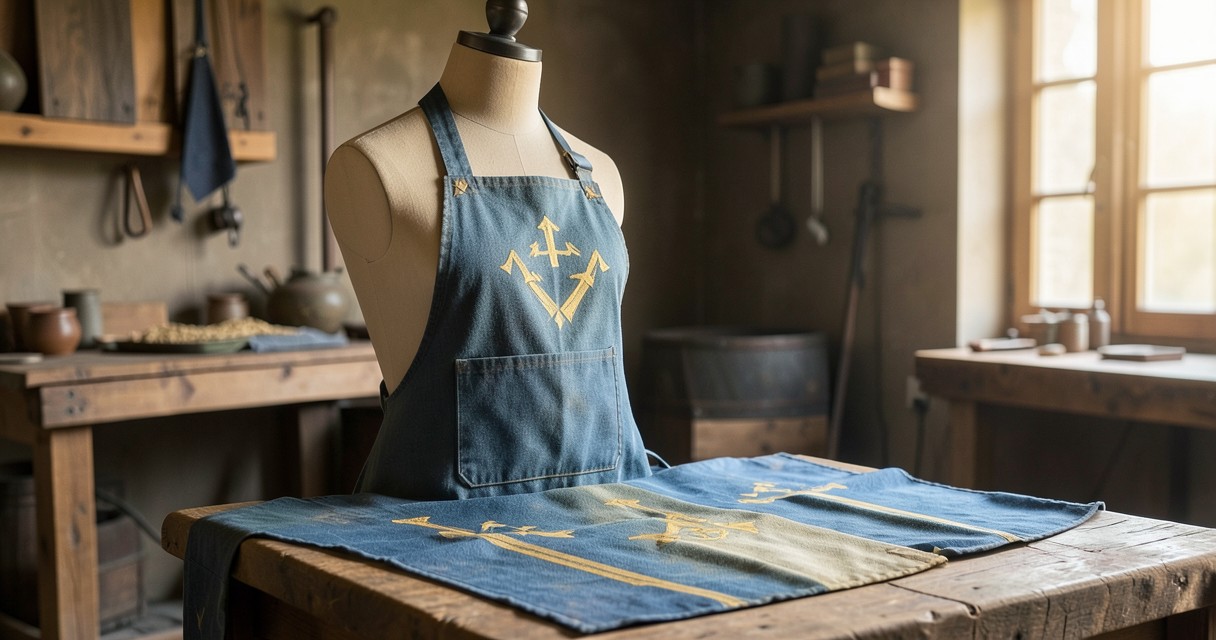
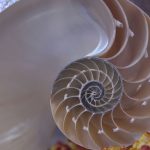
The embroidery and decoration of Masonic aprons further illustrate the importance of proportion. Floral motifs, geometric patterns, and symbolic imagery are arranged according to mathematical principles that ensure visual coherence. For example, the spacing between embroidered elements often follows the Fibonacci sequence, a series of numbers where each number is the sum of the two preceding ones. This sequence is closely related to the golden ratio and appears frequently in nature, from the arrangement of leaves on a stem to the spiral of a nautilus shell. By incorporating the Fibonacci sequence into their designs, Masonic artisans create aprons that are not only beautiful but also deeply symbolic, reflecting the natural order of the universe.
The use of proportion in Masonic regalia extends beyond aprons. Sashes, collars, and jewels are also designed according to specific ratios that ensure visual balance. The width of a sash, for instance, may be determined by the golden ratio in relation to the wearer’s height, creating a sense of harmony between the garment and the individual. These proportional systems are not static. They evolve over time, reflecting changes in artistic trends and philosophical interpretations. Yet, the underlying principle remains the same. Proportion is a tool for expressing the Masonic belief in the interconnectedness of all things, a principle that lies at the heart of both art and science.
Numerical Symbolism and the Masonic Use of Ratios
Numbers hold profound significance in Masonic art, where they are used to convey moral and philosophical lessons through proportional relationships. The number three, for example, appears frequently in Masonic symbolism, representing the three degrees of Freemasonry, the three principal officers of a lodge, and the three great lights. These triads are not merely symbolic. They are often reflected in the proportions of Masonic art, where elements are arranged in groups of three or divided into thirds to create a sense of balance and harmony. The number five, another important Masonic number, is associated with the five points of fellowship and the five orders of architecture. These numerical relationships are not arbitrary. They are carefully calibrated to reinforce the Masonic belief in the power of numbers to reveal universal truths.
The use of ratios in Masonic art extends beyond simple numerical symbolism. The relationship between different elements, such as the height of a column and its diameter, often follows specific proportional systems. For example, the Doric order of architecture, which is frequently referenced in Masonic symbolism, adheres to a ratio of 4:1 between the height of a column and its diameter. This ratio is not merely aesthetic. It reflects a deep understanding of structural integrity and visual harmony, principles that are central to both art and science. By incorporating these ratios into their designs, Masonic artisans create works that are not only beautiful but also meaningful, serving as visual representations of the Masonic commitment to precision and balance.
The study of proportion in Masonic art also reveals the influence of Pythagorean numerology, where numbers are seen as the building blocks of the universe. The Pythagorean theorem, for example, is often referenced in Masonic symbolism, where it serves as a reminder of the interconnectedness of all things. The theorem’s emphasis on the relationship between the sides of a right triangle reflects the Masonic belief in the importance of balance and harmony. This mathematical principle is not limited to theoretical discussions. It is often incorporated into the design of Masonic art, where it serves as a visual representation of the Masonic ideal of unity in diversity. The use of numerical symbolism in this way transforms Masonic art into a living expression of the principles that lie at the heart of both art and science.
Historical Evolution of Proportional Systems in Masonic Art
The study of proportion in Masonic art is not static. It has evolved over centuries, reflecting changes in artistic trends, philosophical interpretations, and technological advancements. In the early days of Freemasonry, proportional systems were heavily influenced by the architectural principles of the Renaissance, where the golden ratio and sacred geometry were seen as manifestations of divine order. Masonic artisans of this period often incorporated these principles into their designs, creating works that were both beautiful and deeply symbolic. The tracing boards of the 18th century, for example, frequently featured geometric patterns that adhered to the golden ratio, reflecting the influence of Renaissance ideals on Masonic thought.
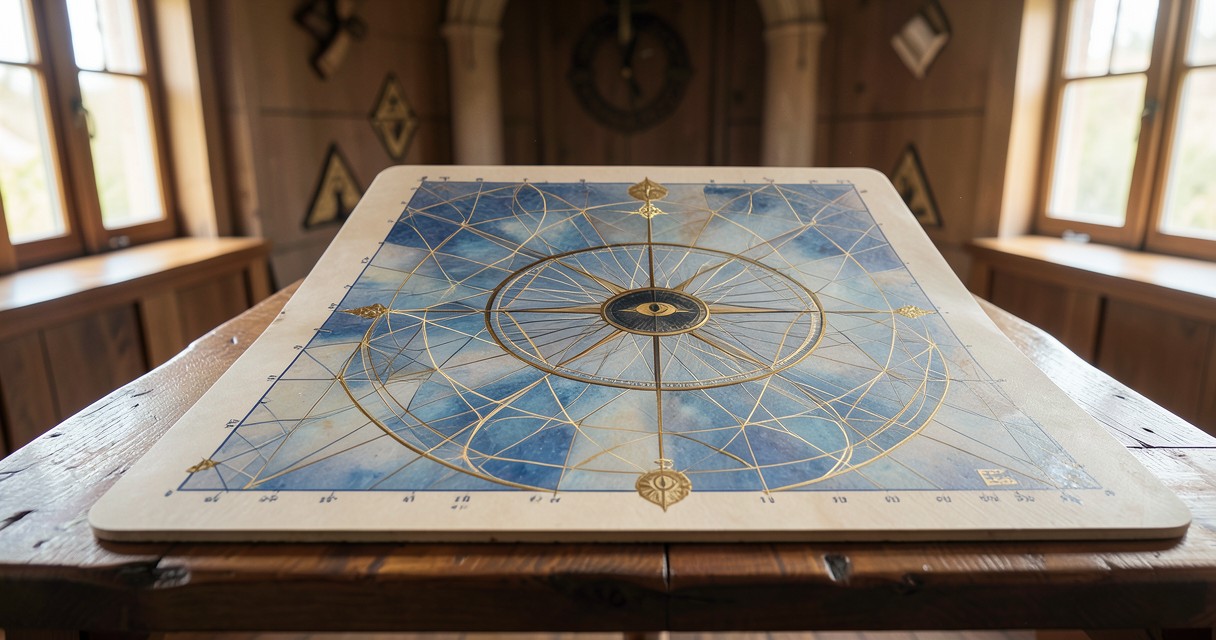
As Freemasonry spread across Europe and the Americas, the study of proportion in Masonic art began to incorporate elements from other cultural traditions. The use of the square root of two, for example, became more prominent in the 19th century, reflecting the influence of Islamic geometric patterns on Masonic design. This period also saw the introduction of new symbolic elements, such as the all-seeing eye, which was often incorporated into designs according to specific proportional relationships. These changes were not merely aesthetic. They reflected a broader shift in Masonic philosophy, where the study of proportion became a means of exploring the interconnectedness of different cultural and artistic traditions.
The 20th century brought further evolution to the study of proportion in Masonic art. The introduction of modernist design principles, with their emphasis on simplicity and functionality, led to a reevaluation of traditional proportional systems. Masonic artisans began to experiment with new ratios and geometric patterns, creating works that were both innovative and deeply rooted in tradition. This period also saw the rise of digital design tools, which allowed for greater precision in the creation of Masonic art. Despite these changes, the underlying principles of proportion remained the same. The study of proportion in Masonic art continued to serve as a bridge between the material and the spiritual, reflecting the Masonic belief in the power of art to reveal universal truths.
Proportion as a Bridge Between Art and Science in Freemasonry
The study of proportion in Masonic art is not merely an aesthetic pursuit. It is a scientific endeavor, one that seeks to uncover the underlying principles that govern both the natural and the constructed world. Masonic artisans have long recognized that proportion is not just a tool for creating beauty. It is a language that reveals the hidden order of the universe. This belief is reflected in the way Masonic art incorporates mathematical principles, such as the golden ratio and sacred geometry, into its designs. These principles are not arbitrary. They are based on observations of the natural world, where proportion governs everything from the growth of plants to the movement of celestial bodies.
The scientific study of proportion in Masonic art extends beyond visual design. It encompasses the layout of ritual spaces, the movement of candidates during ceremonies, and even the acoustics of lodge rooms. The dimensions of a lodge room, for example, are often calculated to create a sense of harmony and balance, with proportions that reflect the golden ratio or other mathematical relationships. These calculations are not merely aesthetic. They are designed to enhance the ritual experience, creating a space that feels both sacred and scientifically precise. The use of proportion in this way transforms the lodge room into a laboratory of sorts, where the principles of art and science converge to create a unique and meaningful experience.
The study of proportion in Masonic art also serves as a reminder of the interconnectedness of all things. By incorporating mathematical principles into their designs, Masonic artisans create works that reflect the natural order of the universe. This belief in the power of proportion to reveal universal truths is not limited to Freemasonry. It is a principle that has been explored by artists and scientists throughout history, from the architects of ancient Egypt to the physicists of the modern era. In this sense, the study of proportion in Masonic art is not just a niche pursuit. It is a contribution to a broader conversation about the relationship between art and science, one that continues to inspire and challenge thinkers in both fields.

I have spent the past decade exploring the intersections of Freemasonry, art, and science, researching historic manuscripts and architectural symbolism. My work as a freelance writer and independent researcher allows me to share the rich history of knowledge that these traditions embody.