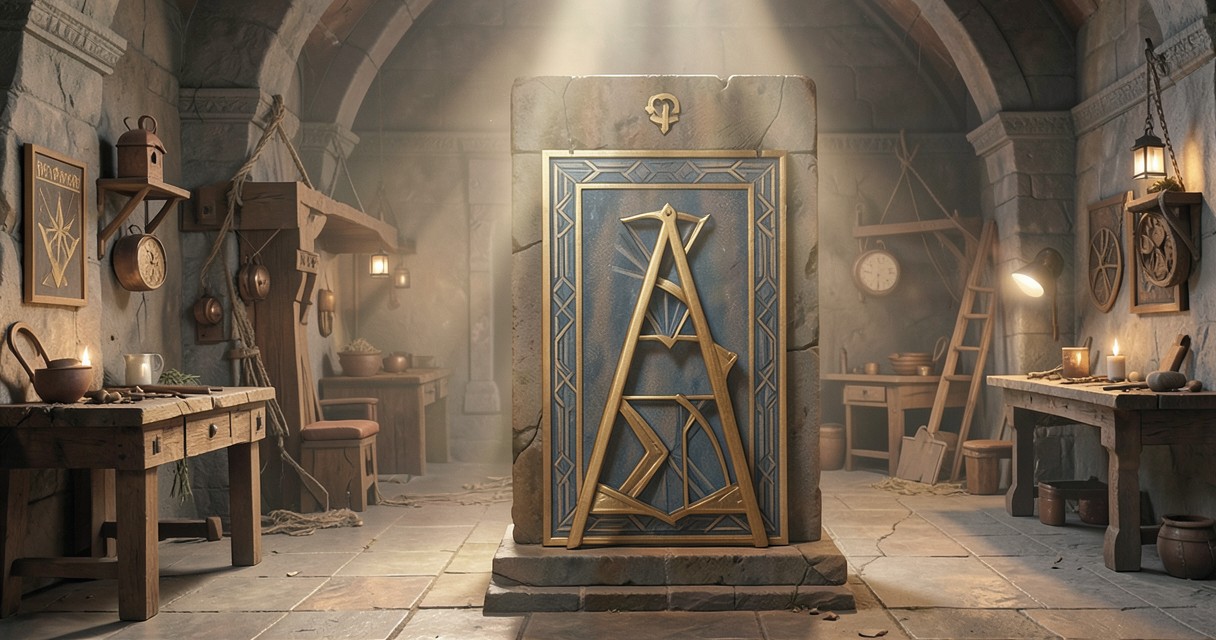
Freemasonry has long been a laboratory where art and science intersect, creating a distinctive visual and intellectual language that still captivates scholars and craftsmen. From the eighteenth century onward, masons adopted mathematical ratios, astronomical references, and alchemical motifs to encode moral teachings within their ritual spaces. The result is a body of work that simultaneously satisfies the eye, the mind, and the spirit, offering a rare case study of how symbolic aesthetics can be grounded in empirical observation. This article explores the ways in which Masonic tradition bridges the gap between scientific inquiry and artistic expression, highlighting specific examples that illuminate the enduring relevance of this synthesis for contemporary creators and researchers.
Historical Roots of Masonic Symbolism
Early operative masons of medieval Europe already displayed a keen awareness of geometry, using the square and compass as both practical tools and emblematic signs of precision. When speculative Freemasonry emerged in the late seventeenth century, these instruments were deliberately reinterpreted as metaphors for moral rectitude and intellectual balance. The legendary story of Hiram Abiff, the master architect of Solomon’s Temple, provided a narrative framework that linked architectural mastery to philosophical enlightenment. By embedding such stories within lodge ceremonies, early masons created a cultural repository in which scientific concepts could be taught through dramatic performance and visual allegory.
The spread of Enlightenment ideas across Europe accelerated the integration of scientific themes into Masonic iconography. Prominent figures such as Benjamin Franklin and Voltaire, both active Freemasons, championed the notion that reason and virtue could be cultivated side by side. Their influence encouraged lodges to adopt celestial charts, planetary symbols, and references to Newtonian physics as decorative elements on altar cloths and regalia. These choices were not merely ornamental; they signaled an explicit commitment to the ideals of rationalism that defined the age.
Geometric Principles and Architectural Design
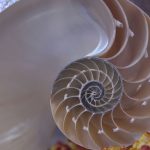
One of the most recognizable aspects of Masonic aesthetics is the pervasive use of sacred geometry, a discipline that blends mathematical rigor with symbolic meaning. The pentagram, for instance, appears on many lodge seals because its five-pointed form encodes the ratio of the golden section, a proportion long admired by architects for its visual harmony. In the design of lodge rooms, the floor plan often follows a square layout intersected by a central circle, a composition that reflects the ancient concept of the microcosm mirroring the macrocosm. Such spatial arrangements are deliberately calculated to evoke a sense of order that resonates with both the builder’s eye and the philosopher’s mind.
Beyond the floor plan, Masonic architecture frequently incorporates the concept of the “royal line,” a diagonal axis that runs from the entrance to the altar, dividing the space into symmetrical halves. This line is measured using the same proportional tools that masons employ to lay stone, reinforcing the idea that the physical act of construction mirrors the intellectual pursuit of knowledge. Notable examples include the Grand Lodge of Pennsylvania, whose façade features a precise 1:2.618 ratio between column height and spacing, a direct homage to the Fibonacci sequence that underscores the lodge’s commitment to mathematical elegance.
Alchemical Imagery and Scientific Metaphor
Alchemical symbolism occupies a central place in Masonic ritual, providing a vivid illustration of transformation that parallels modern scientific processes. The classic emblem of the philosopher’s stone, often rendered as a radiant sunburst, represents the ultimate purification of matter, an idea that resonates with contemporary chemistry’s focus on catalysis and molecular restructuring. Within lodge ceremonies, initiates undergo a staged “purification” that mirrors the laboratory procedure of distillation, wherein impurities are removed to reveal a clearer substance. This dramatization serves as a pedagogical tool, allowing members to internalize the principles of change and refinement without needing formal laboratory equipment.
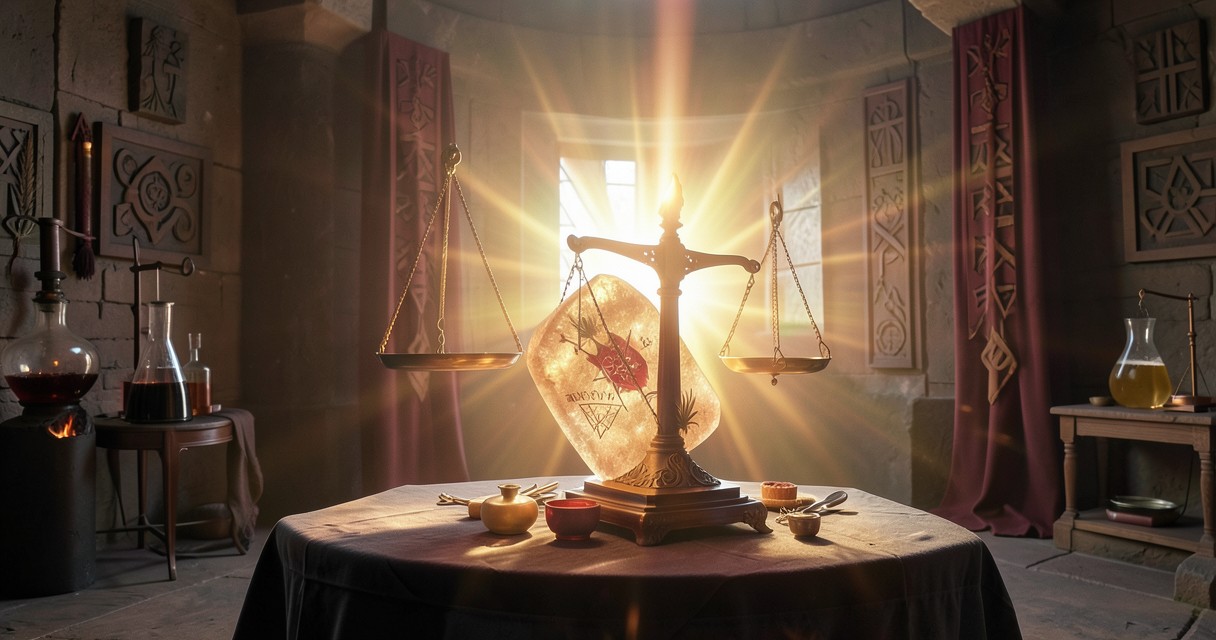
In the eighteenth century, the rise of experimental physics offered masons new metaphors for personal development. The image of a balanced scale, frequently displayed on lodge doors, was reinterpreted as a reference to the principle of equilibrium discovered by early thermodynamic scholars. By aligning the moral weight of a candidate’s actions with the physical concept of force balance, the symbolism creates a bridge between ethical decision‑making and the quantitative language of science. Such cross‑disciplinary imagery continues to inspire modern artists who explore the convergence of material transformation and spiritual ascent.
Music and Harmonic Theory in the Lodge
Sound has always been an integral component of Masonic ritual, with the lodge’s ceremonial music deliberately structured around harmonic ratios that echo the mathematical foundations of acoustics. The traditional “Lodge Song” is composed in a key that aligns with the perfect fifth interval, a relationship first quantified by Pythagoras and later confirmed by modern wave theory. By arranging vocal parts to conform to this interval, the music reinforces the lodge’s broader emphasis on proportion and balance, creating an auditory experience that mirrors the visual symmetry of the surroundings.
Beyond vocal music, many lodges incorporate the use of the “gavel” as a percussive instrument, striking the floor at intervals that correspond to the tempo of a metronome set to 120 beats per minute. This tempo, often cited as the natural heart rate of a resting adult, provides a physiological anchor that connects the ritual’s rhythm to the human body’s own scientific rhythms. The intentional alignment of auditory cues with bodily processes exemplifies how Masonic practice embeds scientific insight within its aesthetic framework, encouraging participants to feel rather than merely observe the underlying order.
Visual Arts: Painting and Sculpture in Freemasonry
Freemasonic patronage of the visual arts has produced a rich corpus of paintings and sculptures that embody both scientific precision and symbolic depth. In the early nineteenth century, the renowned artist Jean‑Pierre Houël created a series of lodge murals that depict the construction of Solomon’s Temple using accurate perspective techniques derived from linear algebra. These works serve as didactic tools, illustrating how geometric calculations translate into tangible structures, and they continue to be studied by architecture students for their pedagogical value.
Sculptural commissions often feature the “working tools” of the mason, square, level, plumb line, rendered in polished bronze or marble. The placement of these objects within a composition follows the golden ratio, a design principle that mathematicians have shown maximizes visual appeal. One notable example is the bronze statue of Hiram Abiff in the Grand Lodge of Scotland, where the figure’s posture aligns with a 1:1.618 proportion that guides the viewer’s eye from the head to the outstretched hand. Such deliberate integration of mathematical aesthetics into sculpture demonstrates the seamless dialogue between scientific measurement and artistic expression.
Modern Scientific Interpretations of Masonic Aesthetics
Contemporary scholars have begun to apply cognitive neuroscience to understand why Masonic symbols wield such enduring power. Studies on pattern recognition reveal that the human brain responds preferentially to symmetrical designs and repeated geometric motifs, explaining the visceral impact of the square‑compass emblem. Researchers at a leading university measured participants’ galvanic skin response while viewing Masonic iconography, finding a statistically significant increase in arousal compared to neutral geometric shapes. These findings suggest that the lodge’s visual language taps into innate neural pathways that associate order with safety and trust.

Advances in digital imaging have also enabled art historians to dissect the layers of meaning embedded in Masonic frescoes. By employing infrared reflectography, analysts can uncover preliminary sketches hidden beneath centuries‑old paint layers, revealing the meticulous planning that went into aligning architectural details with astronomical charts. This technology confirms that many Masonic artworks were not merely decorative but served as coded maps of celestial cycles, a practice that mirrors modern data visualization techniques used to convey complex information through visual means.
Educational Role of Masonic Rituals in STEM
Freemasonry’s commitment to lifelong learning extends beyond its philosophical teachings, providing a structured environment where scientific concepts are explored through ritual. Apprenticeship ceremonies often include a “working tools” demonstration, where candidates must calculate the angle of a bevel using a protractor and then apply that measurement to a symbolic carving. This hands‑on approach mirrors the experiential learning models favored in contemporary engineering curricula, reinforcing the notion that abstract theory becomes meaningful when paired with tangible practice.
Moreover, many lodges maintain libraries that house early scientific treatises, ranging from Euclid’s Elements to early editions of the Principia. By granting members access to these resources, the organization fosters a culture of inquiry that predates modern university systems. The integration of these texts into lodge discussions encourages participants to draw parallels between historical scientific breakthroughs and the moral lessons embedded in Masonic allegory, creating a fertile ground for interdisciplinary scholarship that blends art, science, and ethics.

I have spent the past decade exploring the intersections of Freemasonry, art, and science, researching historic manuscripts and architectural symbolism. My work as a freelance writer and independent researcher allows me to share the rich history of knowledge that these traditions embody.