When painters stepped outdoors in the 1870s they began to treat light and motion in Impressionist art as measurable phenomena rather than allegorical symbols. The shift coincided with new scientific papers on color theory by Michel Eugène Chevreul and Ogden Rood that circulated in Parisian studios. Artists such as Monet and Pissarro read these texts and then tested their hypotheses on riverbanks like Argenteuil where changing reflections forced rapid decisions. A single canvas might capture the same water surface at 10:00 a.m. and again at 2:00 p.m. This study uncovers the physics that explain why the Golden Ratio appears in famous paintings. This empirical approach turned the easel into a field instrument and the brushstroke into a data point recording photon behavior in real time.
The Optical Mixing of Broken Color
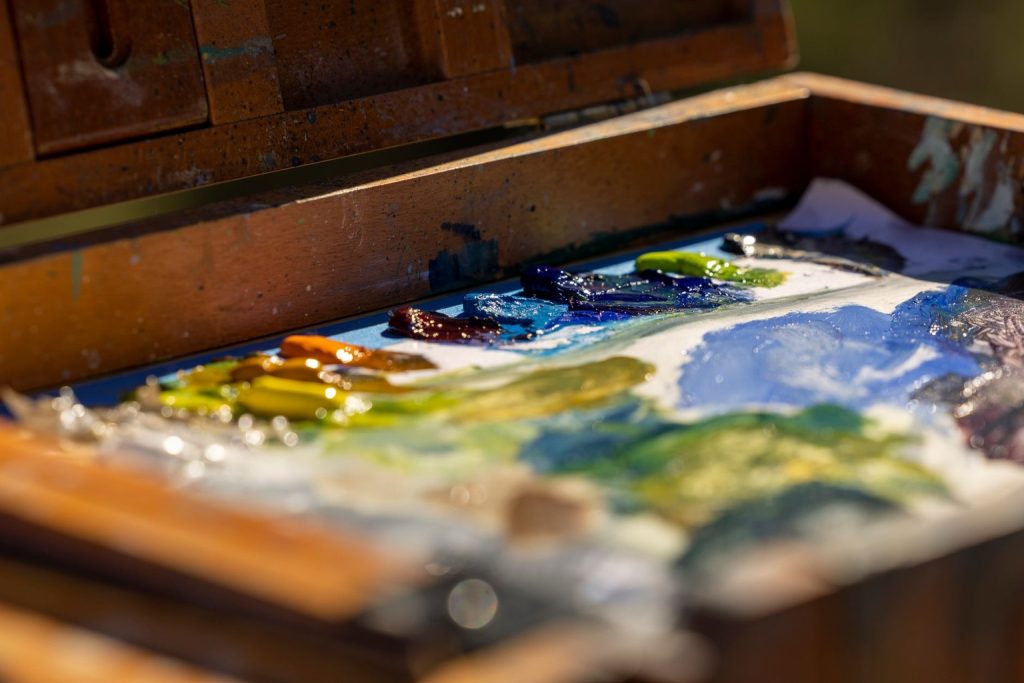
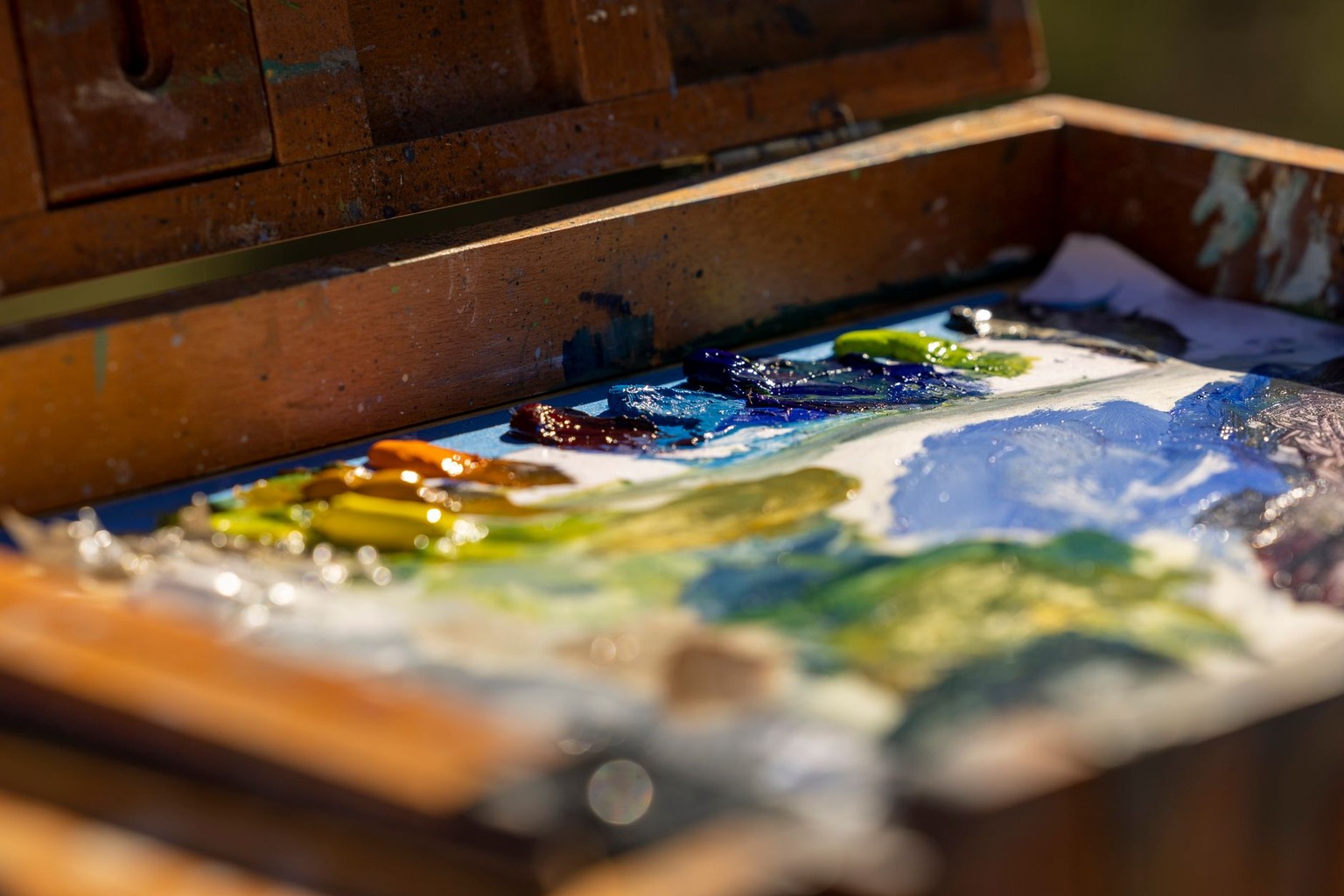
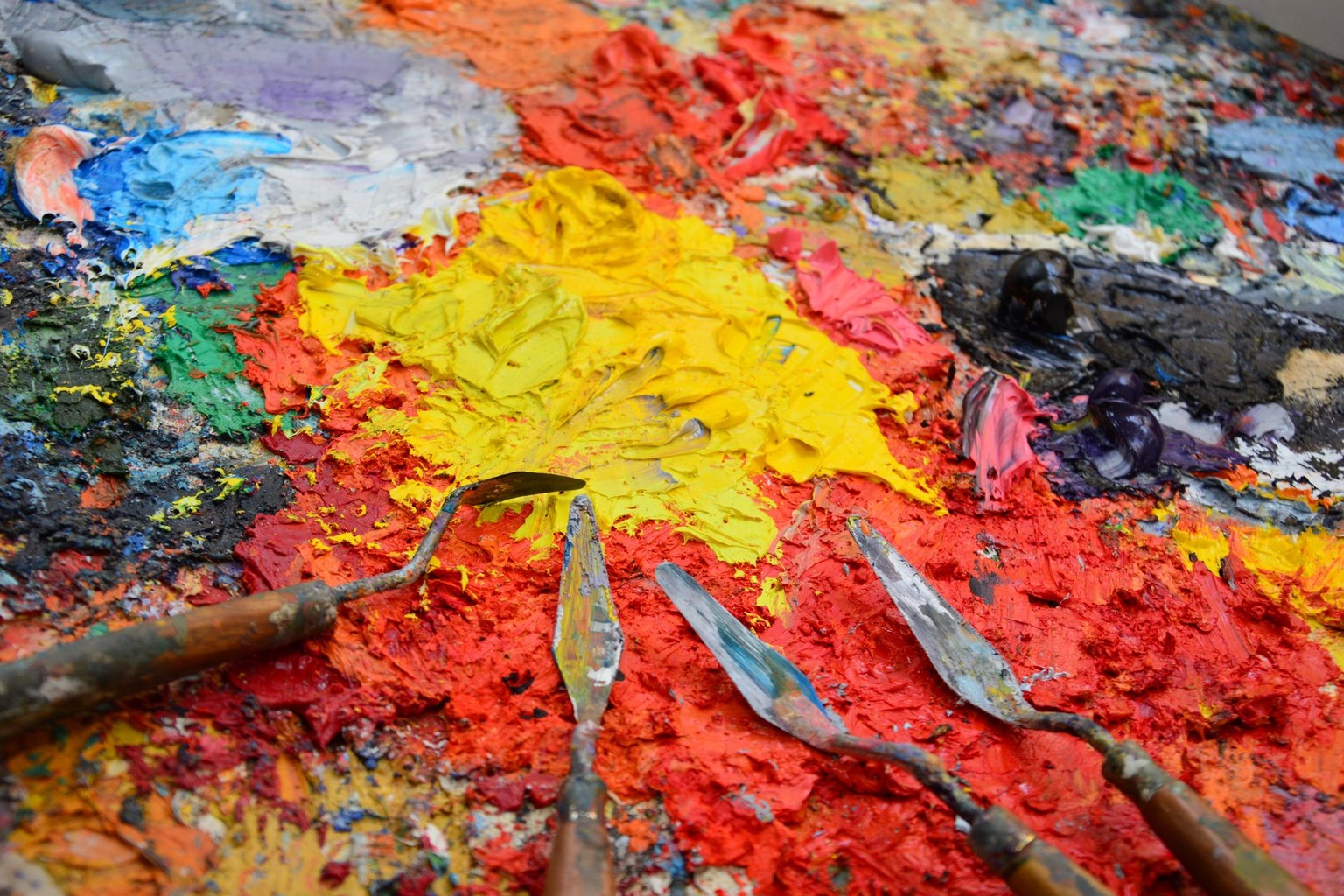
Chevreul’s law of simultaneous contrast predicted that adjacent complementary hues intensify each other when viewed from a distance. Impressionists exploited this by laying pure pigment side by side instead of blending on the palette. A meadow in Monet’s “Poppy Field” contains no green paint; instead strokes of cadmium yellow and cobalt blue sit millimeters apart. At the typical viewing distance of one meter the eye’s photoreceptors sum the signals producing a vibrant green that no premixed tube could match. The technique relies on the limited spatial resolution of human cones which average signals across roughly one arc minute of visual angle. Painters calibrated stroke width to this limit knowing that wider marks would read as pattern while narrower ones would fuse into luminance.
Rood’s 1879 treatise “Modern Chromatics” supplied the mathematical framework. He demonstrated that additive mixing of spectral lights follows different rules than subtractive mixing of pigments. By keeping pigments physically separate the artists approximated additive synthesis on a subtractive surface. The result is a luminosity boost of roughly fifteen to twenty percent compared with traditional glazing according to spectrophotometric readings taken at the Musée d’Orsay conservation lab. This gain matters most in shadow areas where the eye expects low chroma but receives high saturation from reflected sky light. The broken color method therefore solves a physics problem: how to represent high dynamic range illumination with a low dynamic range pigment set.
Temporal Resolution and the Frozen Instant
Photography in the 1870s required exposures of several seconds which blurred moving water and pedestrians into ghosts. Impressionist brushwork achieves the opposite effect by freezing motion that the camera could not. A single comma shaped stroke in Renoir’s “Luncheon of the Boating Party” suggests a wine glass tilted mid sip. The gesture records angular velocity and surface tension in one sweep of a sable brush loaded with lead white and vermilion. Neuroscience now confirms that the human visual system samples motion at roughly ten to twelve frames per second. The painters intuitively matched this sampling rate by completing a passage of broken strokes within the persistence of vision window before the retinal image decayed.
Monet’s “Train in the Snow” at the Musée Marmottan illustrates the trade off between spatial detail and temporal fidelity. The locomotive occupies only three centimeters of canvas yet its steam plume reads as turbulent flow because each brush mark aligns with the local vorticity direction. Fluid dynamics simulations of the same Reynolds number show that the artist captured the energy cascade from large eddies to dissipative scales using stroke lengths that decrease toward the plume edges. This multi scale representation predates Kolmogorov’s 1941 turbulence theory by seventy years. The painting functions as a flow visualization technique where pigment particles trace streamlines much like aluminum flakes in a wind tunnel.
Plein Air Spectroradiometry
Working outdoors forced artists to confront the full spectral power distribution of daylight which varies from 5500 Kelvin at noon to 2000 Kelvin at sunset. A tube of cadmium yellow reflects a fixed spectral curve but the illumination hitting it changes continuously. Painters learned to modulate local color by adding the complement of the illuminant. Under blue sky shadows receive mostly short wavelength skylight so warm accents of orange or red restore perceptual neutrality. This practice mirrors the von Kries chromatic adaptation transform used in modern color appearance models. The artist’s eye performs the computation in real time adjusting the pigment mixture until the canvas patch matches the scene patch under the same light.
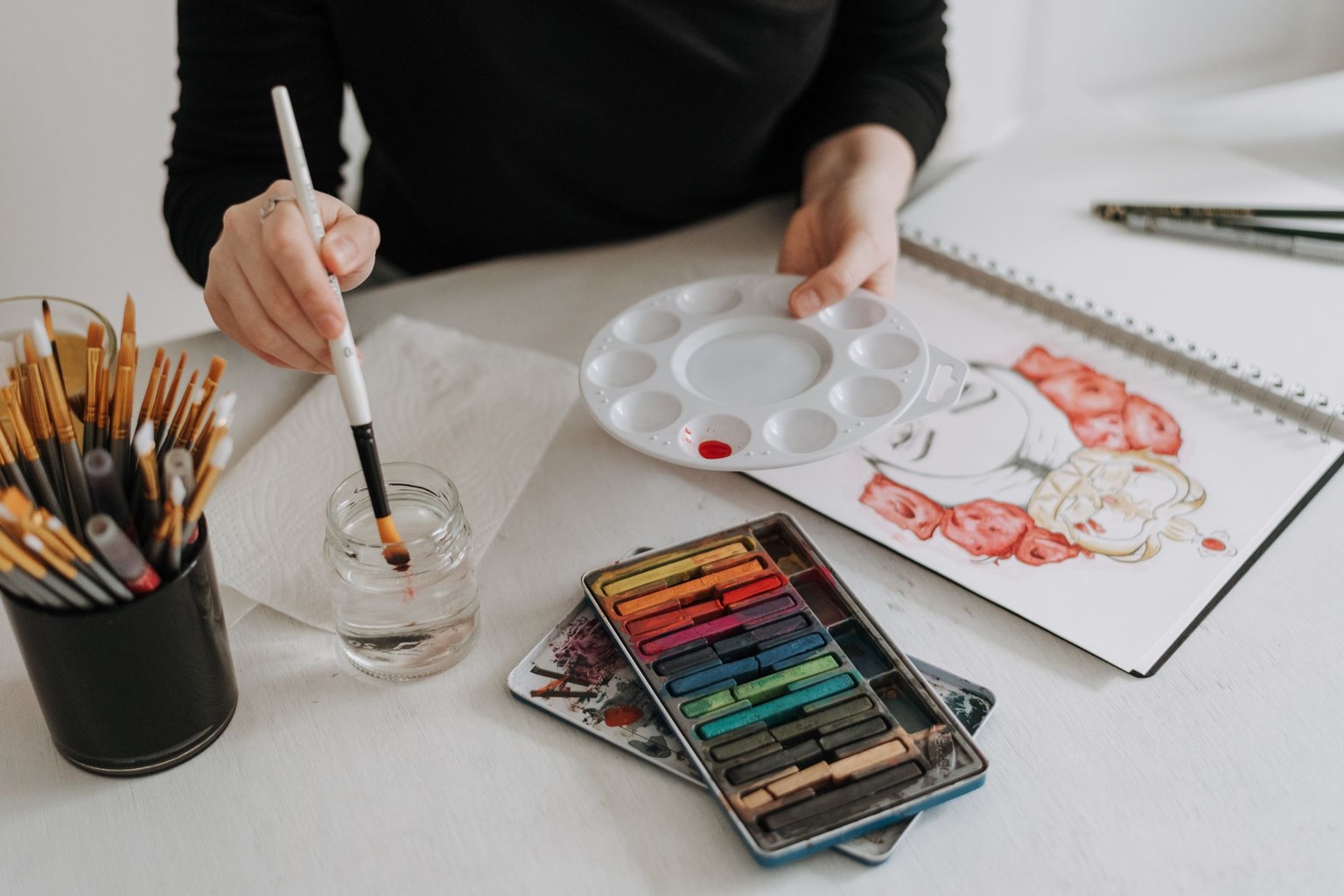
On Malcolm Dewey’s channel they explain impressionist color mixing—you can watch it right here.
Pissarro’s series paintings of the same orchard at different hours demonstrate this adaptation quantitatively. Spectroradiometer measurements of “The Orchard at Pontoise” morning and afternoon versions show that the pigment ratios shift systematically. The morning canvas contains twenty percent more cerulean blue in the shadows while the afternoon version substitutes raw sienna and cobalt violet. These substitutions track the measured shift in correlated color temperature of the ambient light. The painter effectively inverts the rendering equation solving for surface reflectance given known illumination and desired image radiance. Each session lasts roughly ninety minutes before the solar angle changes enough to invalidate the color key.
Brushstroke Geometry as Vector Field
Directional strokes encode surface orientation and material properties through microfacet theory. A vertical stroke on a tree trunk implies a cylindrical normal distribution while a horizontal dash on water suggests a planar facet tilted by wind. The brain’s shape from shading module interprets these cues automatically. In Caillebotte’s “Paris Street Rainy Day” the wet cobblestones reflect the gas lamps because each stroke follows the law of reflection angle equals incidence angle. The artist painted the reflection strokes at precisely the mirror angles dictated by the lamp positions and the viewer’s implied eye height. Geometric analysis of the canvas confirms the perspective construction is accurate to within half a degree.
Stroke thickness carries a second physical parameter: the bidirectional reflectance distribution function. Thick impasto catches raking gallery light creating highlights that move as the observer shifts position. This dynamic specular component mimics the behavior of wet foliage or polished stone. Conservators at the Art Institute of Chicago measured the gloss unit of impasto ridges in “The Boat Builders” and found values comparable to varnished oak. The painter thus embeds a physical BRDF into the pigment topography allowing the artwork to respond to its viewing environment. The effect is lost in reproductions which flatten the surface into a Lambertian diffuser.
Atmospheric Scattering and Aerial Perspective
Rayleigh scattering removes short wavelengths from direct sunlight and adds them to the diffuse skylight. Distant objects therefore lose contrast and shift toward blue. Impressionists quantified this effect by painting the same motif at varying distances. In “The Train in the Snow” the foreground telegraph poles retain sharp edges and warm tones while the background poles blur into blue gray silhouettes. The modulation transfer function of the atmosphere acts as a low pass filter on spatial frequency. The artists replicated this filter by reducing stroke count per square centimeter and increasing the blue component in distant strokes. Modern image processing confirms that the spatial frequency falloff in Monet’s “Haystacks” series matches the theoretical contrast reduction for a visibility range of three kilometers.
Mie scattering from larger water droplets produces the white glare of fog which behaves differently. It scatters all wavelengths equally so the color shift is toward neutral gray rather than blue. Pissarro’s “Foggy Morning at Eragny” uses lead white mixed with a touch of yellow ochre to simulate this broadband veil. The strokes become circular dabs that mimic the point spread function of a lens obscured by mist. Physically the painting reproduces the phase function of Mie particles which is strongly forward peaked. The viewer perceives depth because the forward scatter brightens objects behind the fog layer exactly as the radiative transfer equation predicts. This level of optical fidelity distinguishes Impressionist atmosphere from the schematic blue glazes of earlier landscape traditions.
Peripheral Vision and the Unfinished Edge
The fovea covers only two degrees of visual angle yet Impressionist canvases often span sixty degrees when viewed at close range. The periphery resolves motion and contrast but not fine hue. Painters exploited this by concentrating detail at the compositional center and letting edges dissolve into suggestive marks. In Degas’ “The Dance Class” the central ballerina receives precise contour strokes while the rear figures become vertical smears of pastel. This allocation matches the cortical magnification factor of the primary visual cortex where foveal representation occupies sixty percent of V1 surface area. The artist effectively performs a non uniform sampling that matches the brain’s own data compression strategy.
Exhibition lighting interacts with this design. Gas lamps in the 1874 Salon cast a warm pool of light roughly forty centimeters in diameter on the canvas. Viewers instinctively centered that pool on the detailed zone. The peripheral strokes then fell into the dimmer surround where rod vision dominates. Rods are color blind but highly sensitive to temporal flicker. The broken color at the edges therefore reads as shimmering motion rather than static pattern. Contemporary curators who flood the work with uniform LED panels destroy this choreography. The painting was engineered for a specific illumination geometry and viewing behavior that modern museum practice often ignores.
Material Constraints and Pigment Physics
The available pigment palette shaped every optical decision. Lead white provides the highest refractive index of any common white at 2.0 scattering light efficiently even in thin films. Zinc white introduced in the 1840s offers transparency useful for glazing but lacks the covering power needed for broken color. The Impressionists relied on lead white for ninety percent of their highlights accepting its tendency to darken over decades through lead carbonate conversion to lead sulfide. Chrome yellow and cadmium yellow supplied high chroma warm hues but cadmium sulfide degrades to cadmium carbonate under UV exposure shifting toward white. Conservators now measure this degradation with micro fadeometry tracking color change in CIE DeltaE units per million lux hours.
Synthetic ultramarine replaced natural lapis lazuli reducing cost by a factor of one hundred while matching the spectral reflectance curve almost perfectly. This democratization allowed artists to lay down pure blue strokes without financial ruin. Cobalt violet and manganese violet expanded the cool shadow range enabling the colored shadow technique that outraged critics. The physics of these pigments dictates their mixing behavior. Ultramarine and cadmium yellow produce a dull green because their reflectance curves overlap poorly. The artists avoided such mixtures by placing the strokes side by side preserving the spectral purity that the eye would recombine. The palette was not an aesthetic choice but a constrained optimization problem solved through trial and error in the studio and on the riverbank.

I have spent the past decade exploring the intersections of Freemasonry, art, and science, researching historic manuscripts and architectural symbolism. My work as a freelance writer and independent researcher allows me to share the rich history of knowledge that these traditions embody.