In the long tradition of artistic practice that seeks to translate abstract thought into concrete form, Masonic art occupies a distinctive niche where geometry, philosophy, and ritual converge. The craft of Freemasonry, with its centuries‑old emphasis on moral improvement through symbolic work, has inspired painters, architects, and sculptors to embed intellectual concepts within visual media. For scholars of art and science, examining this body of work reveals how a secretive fraternity has contributed to the broader dialogue between visual culture and the pursuit of knowledge, turning stone, canvas, and metal into carriers of layered meaning.
Origins of a Symbolic Visual Language
The visual vocabulary of Masonic art emerged from the operative guilds of medieval stone masons, who possessed specialized knowledge of geometry and building techniques. When the speculative branch of Freemasonry formed in the early eighteenth century, it retained the tools of the craft as allegorical devices, turning the square and compass into symbols of moral rectitude and universal order. Early lodge rooms displayed painted boards and carved wooden panels that illustrated the legend of Hiram Abiff, a mythic master builder whose death and resurrection served as a metaphor for personal enlightenment. These early artworks were not decorative alone; they functioned as didactic aids, guiding initiates through a progressive series of intellectual challenges.
Beyond the lodge, the spread of printed tracts and illuminated manuscripts amplified the reach of Masonic symbolism across Europe and the American colonies. Illustrated almanacs and engraved bookplates often featured the all‑seeing eye, a motif that linked divine oversight with the pursuit of hidden truths. By embedding such symbols in everyday objects, Masonic artists created a visual network that reinforced the fraternity’s philosophical agenda, turning ordinary items into subtle prompts for contemplation.
Geometric Foundations and Philosophical Meaning
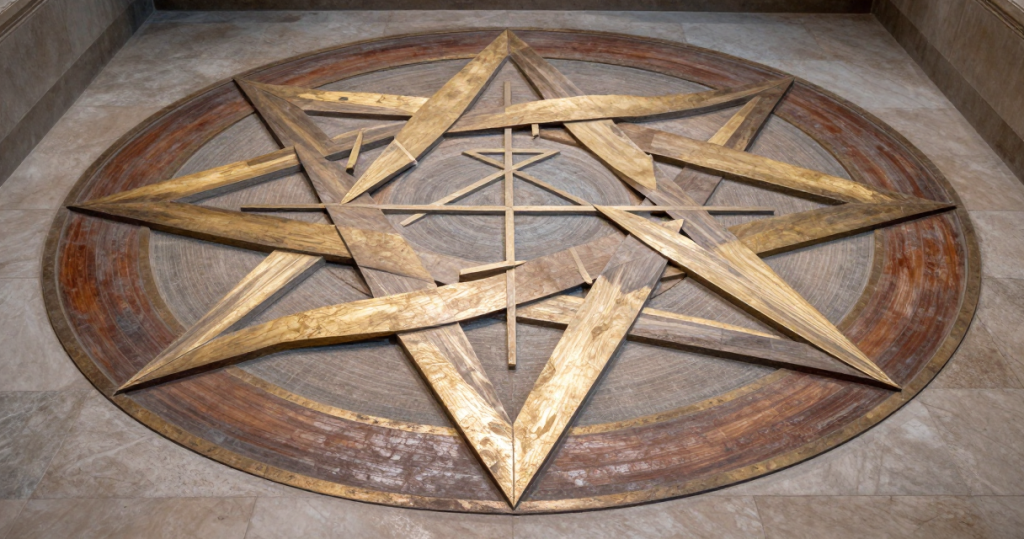
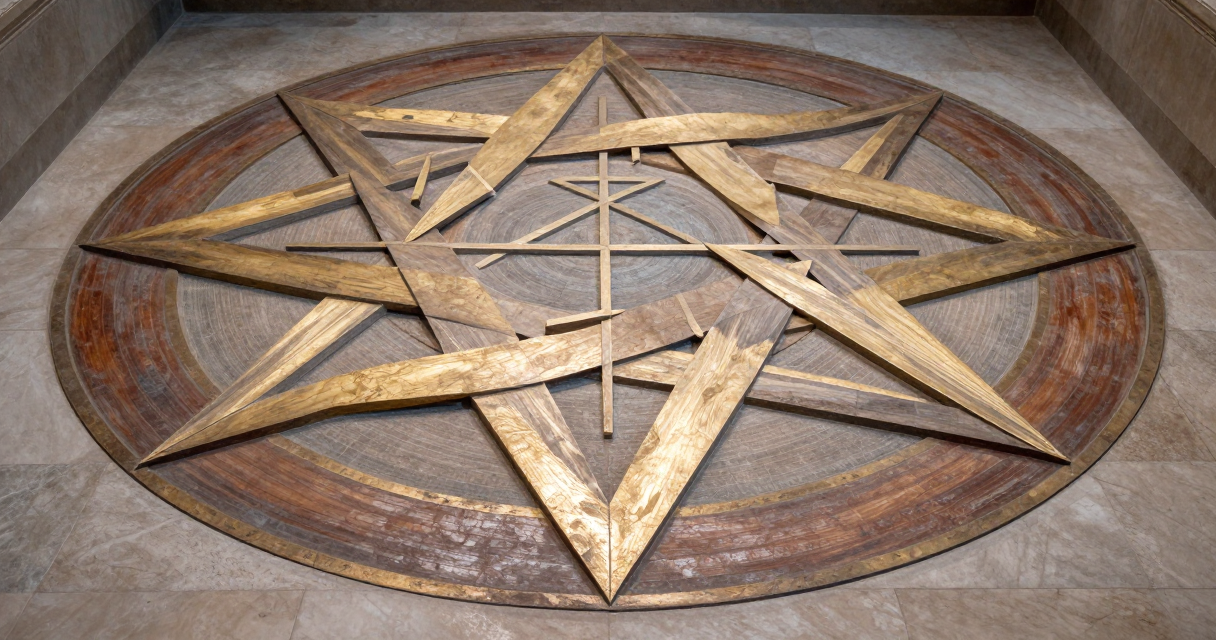
At the heart of Masonic art lies a fascination with geometry, a discipline that bridges the empirical rigor of science with the aesthetic balance prized by artists. The regular polyhedra, particularly the tetrahedron and dodecahedron, recur in lodge decorations as representations of elemental forces and cosmic order. In a typical lodge ceiling, a central sunburst radiates from a perfect circle, invoking the ancient belief that the circle embodies infinite continuity and the sun denotes illumination of the mind. These geometric motifs are not mere ornamentation; they serve as visual analogues for the intellectual pursuit of harmony between the finite and the infinite.
Philosophically, Masonic symbols convey layered narratives that invite viewers to decode moral lessons through visual analysis. The square, for instance, is paired with the notion of virtue, encouraging the observer to align personal actions with ethical standards. The compass, when drawn outward, suggests the aspiration to expand one’s intellectual horizons while maintaining a disciplined boundary. Such dualities are reinforced in allegorical paintings where figures hold these tools, offering a tableau that simultaneously celebrates artistic skill and the disciplined inquiry characteristic of scientific method.
Architectural Masterpieces as Intellectual Statements
Freemasonry’s influence on architecture is perhaps the most visible testament to its commitment to intellectual expression. Grand edifices such as the George Washington Masonic National Memorial in Washington, D.C., embody a synthesis of classical orders, precise proportion, and symbolic ornamentation that reflects Masonic ideals. The building’s façade incorporates a series of pilasters topped with the square and compass, while the interior dome features a star‑filled sky, echoing the fraternity’s reverence for celestial navigation and cosmic order. Each architectural decision, from the choice of marble to the alignment of windows, is calculated to convey a narrative of enlightenment and civic responsibility.
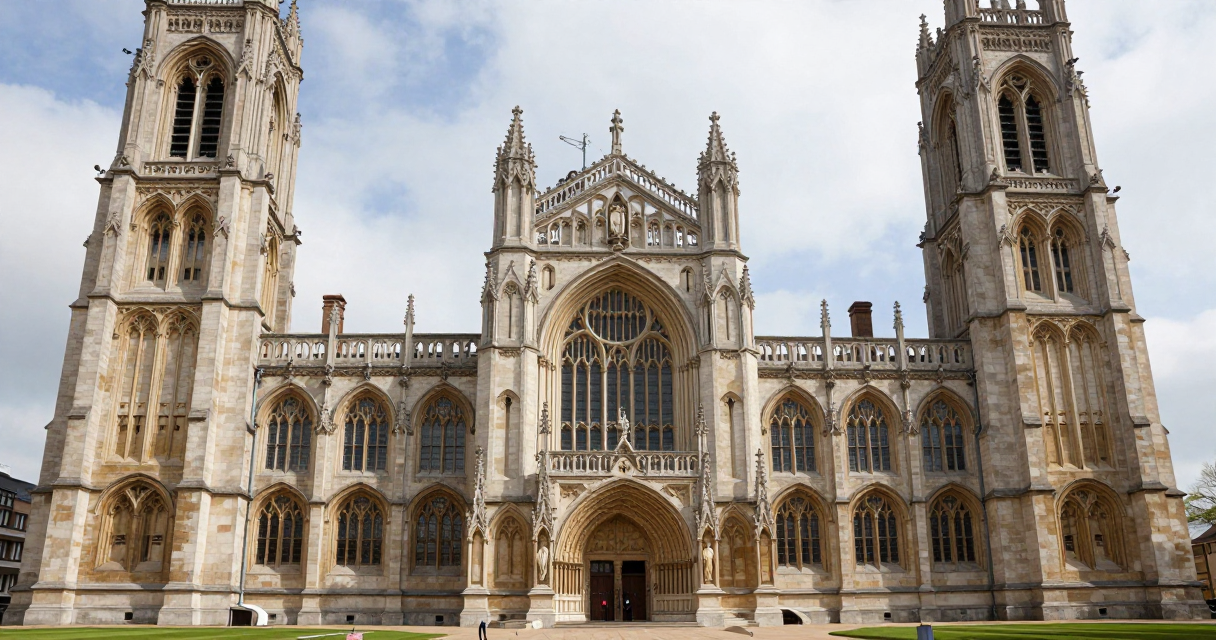
Beyond monumental structures, Masonic principles have guided the design of civic spaces and university campuses, where the layout of courtyards and the placement of statues follow a geometry that mirrors the lodge’s ritual progression. In the United Kingdom, the Freemasons’ Hall in London showcases a grand staircase that ascends in a series of measured steps, each representing a degree of knowledge. The careful alignment of arches and the use of light in these spaces demonstrate how architecture can function as a three‑dimensional manuscript, inviting occupants to engage with both aesthetic beauty and the underlying intellectual framework.
Painting, Printmaking, and the Visual Narrative
Artists have long turned to Masonic iconography to enrich narrative paintings and prints, using the fraternity’s symbols to add depth to historical and allegorical scenes. In the eighteenth‑century works of William Hogarth, Masonic motifs appear subtly in background elements, such as a compass etched on a wall, signaling the moral undercurrents of the depicted story. Later, the neoclassical sculptor John Flaxman incorporated the square and compass into his line drawings, creating a visual shorthand that linked classical antiquity with contemporary moral philosophy. These integrations demonstrate how painters and printmakers employed Masonic symbols to embed intellectual commentary within popular visual culture.
Modern graphic designers continue this tradition, employing stylized versions of the all‑seeing eye and the beehive to convey themes of vigilance and industriousness in corporate branding. In the realm of fine art, contemporary painters have reinterpreted Masonic allegories through abstract expression, layering translucent washes of color over geometric outlines to suggest the hidden nature of knowledge. By juxtaposing recognizable symbols with experimental techniques, these artists invite viewers to decode layered meanings, fostering an active engagement that mirrors the investigative spirit of scientific inquiry.
Sculpture and Three‑Dimensional Allegory
Sculptural works within Masonic contexts often serve as tactile embodiments of philosophical concepts, translating abstract ideas into material form. Obelisks, a staple of Masonic cemeteries, stand as vertical metaphors for the ascent of the soul toward enlightenment, their sharp apex pointing toward the heavens. Inside lodge chambers, marble columns are sometimes carved with reliefs of the sun, moon, and stars, each celestial body representing a stage of intellectual development. These sculptural choices are deliberate, inviting initiates to physically navigate a space that mirrors the mental journey toward greater understanding.
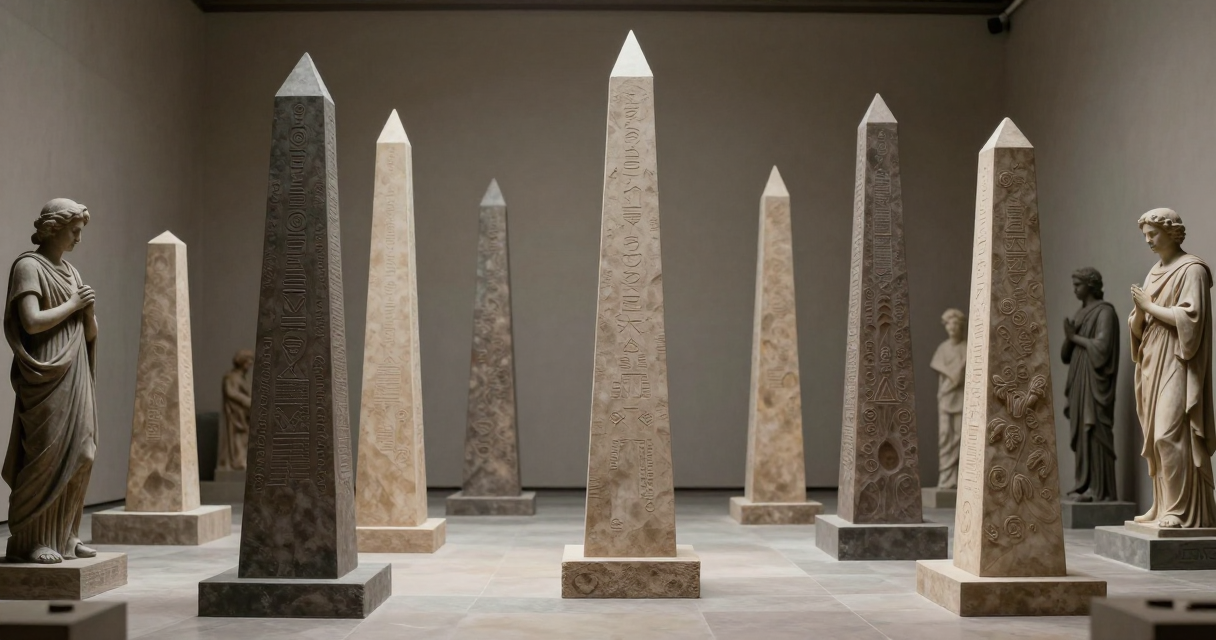
Public monuments commissioned by Masonic lodges further illustrate the synergy between art and intellectual discourse. The Statue of Liberty’s torch, while not a direct Masonic creation, was designed by a French sculptor who was a Freemason, and the surrounding plaques include the square and compass, linking the American ideals of liberty with the fraternity’s emphasis on moral law. Such monuments underscore how sculptors harness Masonic symbolism to communicate collective aspirations, turning stone into a medium that both commemorates and educates.
Digital Media and Interdisciplinary Explorations
In the digital age, artists and researchers have expanded Masonic art beyond physical media, employing virtual reality and data visualization to explore the fraternity’s intellectual heritage. Interactive installations allow participants to manipulate geometric forms in a simulated lodge environment, revealing how changes in proportion affect symbolic meaning. One recent project used algorithmic mapping to translate Masonic ritual steps into a three‑dimensional soundscape, where each musical note corresponds to a specific symbolic gesture, thereby uniting auditory perception with visual symbolism. These interdisciplinary endeavors illustrate how contemporary creators reinterpret ancient motifs through the lens of technology.
The convergence of art, science, and Masonic tradition in digital platforms also fosters collaborative research, as scholars analyze the encoded information within virtual models to uncover patterns that echo historical teachings. By rendering the square and compass as dynamic, manipulable objects, creators enable users to experience the intellectual rigor that historically guided masons in their craft. This fusion of immersive media and symbolic analysis reinforces the idea that Masonic art remains a living conduit for the exchange of knowledge, continually adapting to the tools and perspectives of each new generation.

I have spent the past decade exploring the intersections of Freemasonry, art, and science, researching historic manuscripts and architectural symbolism. My work as a freelance writer and independent researcher allows me to share the rich history of knowledge that these traditions embody.