Freemasonry has long been described as both an art and a science, a duality that shapes its rituals, symbolism, and philosophical underpinnings. This balance is not accidental but intentional, reflecting a tradition that values precision in method and creativity in expression. The craft’s reliance on geometry, architecture, and allegory demonstrates how scientific principles and artistic interpretation coexist, each informing the other. For practitioners, this interplay is not merely theoretical but a lived experience, where the measurable and the imaginative merge to create something greater than their parts. Understanding this dynamic requires examining how Freemasonry employs structured knowledge and aesthetic sensibility in equal measure, producing a system that is both intellectually rigorous and emotionally resonant.
The Geometric Foundations of Masonic Symbolism
The use of geometry in Freemasonry is one of the clearest examples of its scientific roots. The square, compass, and plumb line are not just tools of the stonemason’s trade but symbols of order, balance, and moral rectitude. These instruments derive from practical applications in architecture and engineering, where precise measurements and angles determine structural integrity. The 47th problem of Euclid, often referenced in Masonic lore, illustrates how mathematical principles underpin the craft’s teachings. This theorem, which proves the relationship between the sides of a right triangle, is presented as a metaphor for the harmony between science and morality. The emphasis on geometry extends beyond abstract theory; it is embedded in the layout of lodge rooms, the design of aprons, and even the positioning of officers during rituals.
Yet geometry in Freemasonry is not purely functional. It serves as a bridge between the tangible and the symbolic, transforming mathematical truths into vehicles for moral instruction. The circle, for instance, represents eternity and the infinite, while the square symbolizes earthly stability. These shapes are not chosen arbitrarily but are selected for their dual capacity to convey both scientific precision and philosophical depth. The interplay between these elements demonstrates how Freemasonry elevates technical knowledge into an art form, where the language of numbers and angles becomes a means of exploring human virtue and cosmic order.
The Role of Architecture in Masonic Ritual and Space
Architecture is another domain where Freemasonry’s scientific and artistic dimensions intersect. The lodge room itself is a carefully constructed space, designed to reflect both practical and symbolic considerations. The orientation of the room, the placement of the altar, and the arrangement of seating are all governed by traditions that blend architectural science with ritualistic artistry. The use of the Corinthian, Ionic, and Doric columns in lodge decorations, for example, draws from classical architecture, where each order carries specific aesthetic and structural properties. These columns are not merely decorative but serve as reminders of the craft’s historical connection to the building trades and its broader philosophical aspirations.
The design of Masonic temples often incorporates sacred geometry, a practice that dates back to ancient civilizations. The Golden Ratio, for instance, appears in the proportions of many lodge rooms, creating a sense of harmony and balance. This ratio, approximately 1.618, is found in nature and has been used in art and architecture for centuries to achieve aesthetically pleasing compositions. In Freemasonry, its application is both a nod to scientific principles and an artistic choice, reinforcing the idea that beauty and order are intertwined. The careful planning of these spaces ensures that every element, from the height of the ceiling to the placement of symbols, contributes to the ritual’s emotional and intellectual impact.
Allegory and Storytelling as Artistic Expression
Freemasonry’s use of allegory is where its artistic nature becomes most apparent. The craft’s rituals and legends, such as the story of Hiram Abiff, are not historical accounts but symbolic narratives designed to convey moral lessons. These stories are crafted with the same care as a work of literature or theater, employing dramatic tension, character development, and thematic depth. The allegory of the Temple of Solomon, for example, serves as a framework for exploring themes of labor, integrity, and the search for enlightenment. The narrative is not meant to be taken literally but as a vehicle for personal reflection and growth.
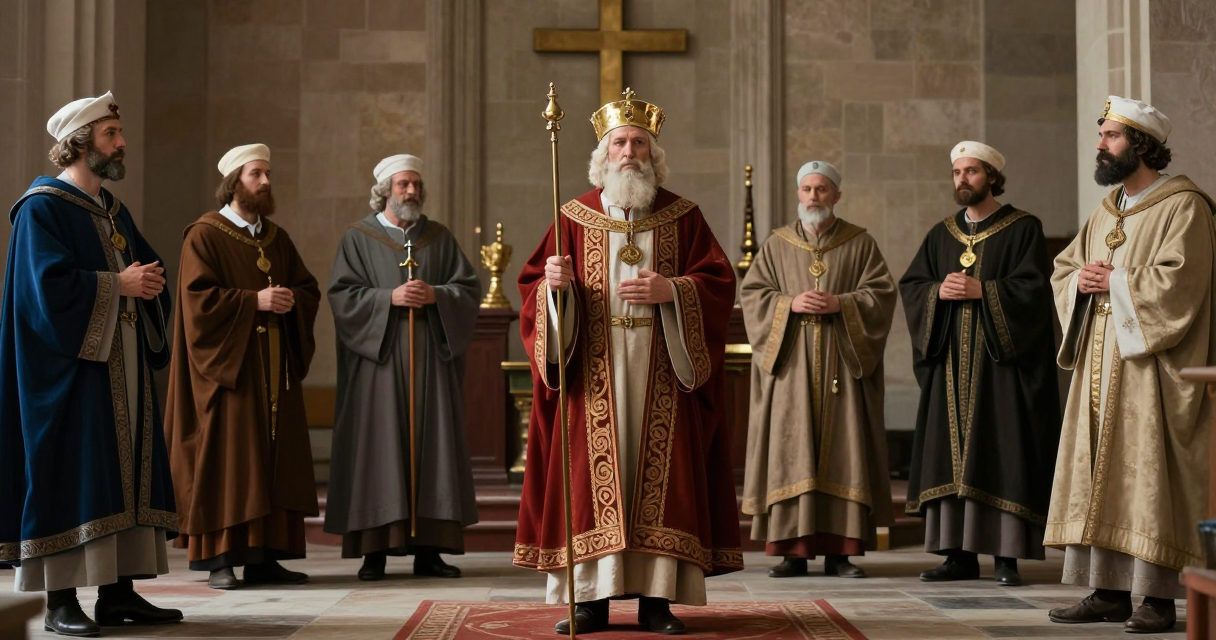
The effectiveness of these allegories lies in their ability to engage both the intellect and the emotions. A well-told Masonic story, like a piece of art, invites interpretation and evokes a range of responses. The use of symbolism, such as the rough and perfect ashlars representing the unrefined and refined self, adds layers of meaning that resonate differently with each individual. This artistic approach ensures that Freemasonry’s teachings remain relevant across time and cultures, as the stories and symbols can be adapted to new contexts while retaining their core messages. The craft’s reliance on allegory demonstrates how art can make abstract concepts accessible and memorable.
The Science of Ritual Precision
While Freemasonry’s artistic elements are often celebrated, its scientific aspects are equally critical, particularly in the execution of rituals. Every movement, word, and gesture in a Masonic ceremony is prescribed with exacting detail, ensuring consistency and meaning across lodges. This precision is not arbitrary but rooted in a tradition that values reproducibility and clarity. The ritual’s structure follows a logical progression, with each step building on the previous one to create a cohesive whole. The use of specific phrases, the timing of knocks, and the placement of officers are all governed by rules that have been refined over centuries.
The scientific nature of Masonic ritual extends to its educational function. The degrees of Freemasonry are designed as a progressive system, where each stage introduces new concepts and symbols in a structured manner. This approach mirrors the scientific method, where knowledge is built incrementally through observation, experimentation, and verification. The ritual’s repetitive nature reinforces learning, allowing members to internalize its lessons over time. The emphasis on memorization and recitation, while sometimes seen as archaic, serves a practical purpose: it ensures that the craft’s teachings are preserved and transmitted accurately from one generation to the next.
The Interplay of Music and Acoustics in Lodge Ceremonies
Music plays a subtle but significant role in Freemasonry, where its use is both an artistic expression and a scientific consideration. Lodge ceremonies often incorporate hymns, chants, or instrumental pieces, chosen for their ability to evoke emotion and enhance the ritual’s atmosphere. The selection of music is not arbitrary but informed by its acoustic properties and symbolic resonance. For example, the use of organ music in some lodges is not only a nod to tradition but also a practical choice, as the instrument’s deep tones create a sense of solemnity and reverence. The acoustics of the lodge room itself are carefully considered, with materials and design elements chosen to amplify or dampen sound as needed.
The scientific aspect of Masonic music extends to its psychological effects. Studies have shown that certain types of music can influence mood, focus, and even physiological responses. In a ritual setting, music serves to heighten the emotional impact of the ceremony, making its lessons more memorable. The use of specific scales or modes, such as the Dorian mode, can evoke a sense of antiquity and mystery, reinforcing the craft’s historical roots. This interplay between art and science ensures that music is not merely decorative but an integral part of the Masonic experience, enhancing both its aesthetic and educational dimensions.
The Evolution of Masonic Symbolism in Modern Contexts
Freemasonry’s symbols have evolved over time, reflecting changes in both artistic trends and scientific understanding. The square and compass, for instance, have been interpreted in countless ways, from their original association with stonemasonry to their modern symbolic meanings. This adaptability is a testament to the craft’s ability to balance tradition with innovation. In the 18th and 19th centuries, Masonic symbolism was heavily influenced by the Enlightenment, with an emphasis on reason, science, and human progress. Symbols like the all-seeing eye, often associated with divine providence, were reinterpreted through a lens of rationalism and empirical inquiry.
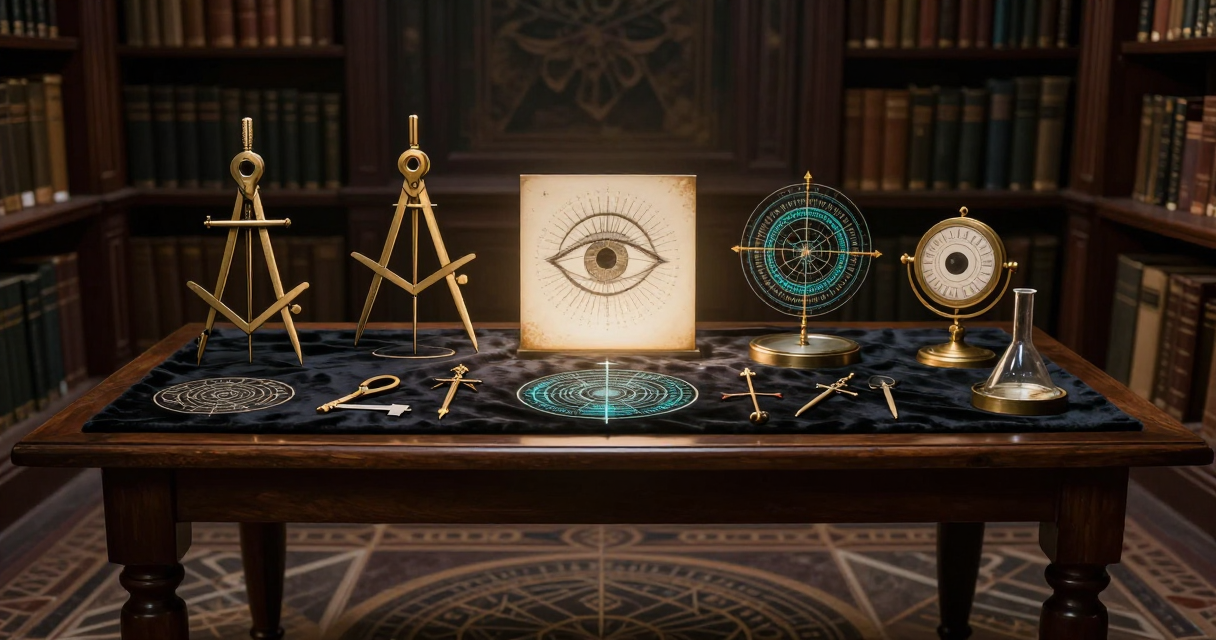
In the 20th and 21st centuries, Masonic symbolism has continued to evolve, incorporating elements from psychology, quantum physics, and even digital culture. The concept of the “Great Architect of the Universe,” for example, has been explored through the lens of cosmology and the laws of physics. This modern interpretation does not replace the traditional understanding but expands it, demonstrating how Freemasonry’s symbols can remain relevant in an ever-changing world. The craft’s ability to adapt its artistic and scientific elements ensures that its teachings continue to resonate with new generations, bridging the gap between ancient wisdom and contemporary knowledge.
The Philosophical Underpinnings of Art and Science in Freemasonry
The balance between art and science in Freemasonry is ultimately a philosophical one, rooted in the belief that truth can be approached through both reason and intuition. The craft’s teachings encourage members to cultivate both their analytical and creative faculties, recognizing that each offers a unique path to understanding. This duality is reflected in the Masonic emphasis on the “liberal arts and sciences,” a curriculum that includes grammar, rhetoric, logic, arithmetic, geometry, music, and astronomy. These disciplines are not studied in isolation but as interconnected fields that together form a comprehensive system of knowledge.
The philosophical foundation of Freemasonry’s approach to art and science can be traced back to thinkers like Pythagoras, who saw mathematics as a divine language, and Plato, who believed that beauty and truth were inseparable. The craft’s rituals and symbols are designed to engage both the mind and the heart, challenging members to think critically while also inspiring them emotionally. This holistic approach ensures that Freemasonry remains a living tradition, one that values both the precision of science and the creativity of art as essential tools for personal and collective growth.

I have spent the past decade exploring the intersections of Freemasonry, art, and science, researching historic manuscripts and architectural symbolism. My work as a freelance writer and independent researcher allows me to share the rich history of knowledge that these traditions embody.