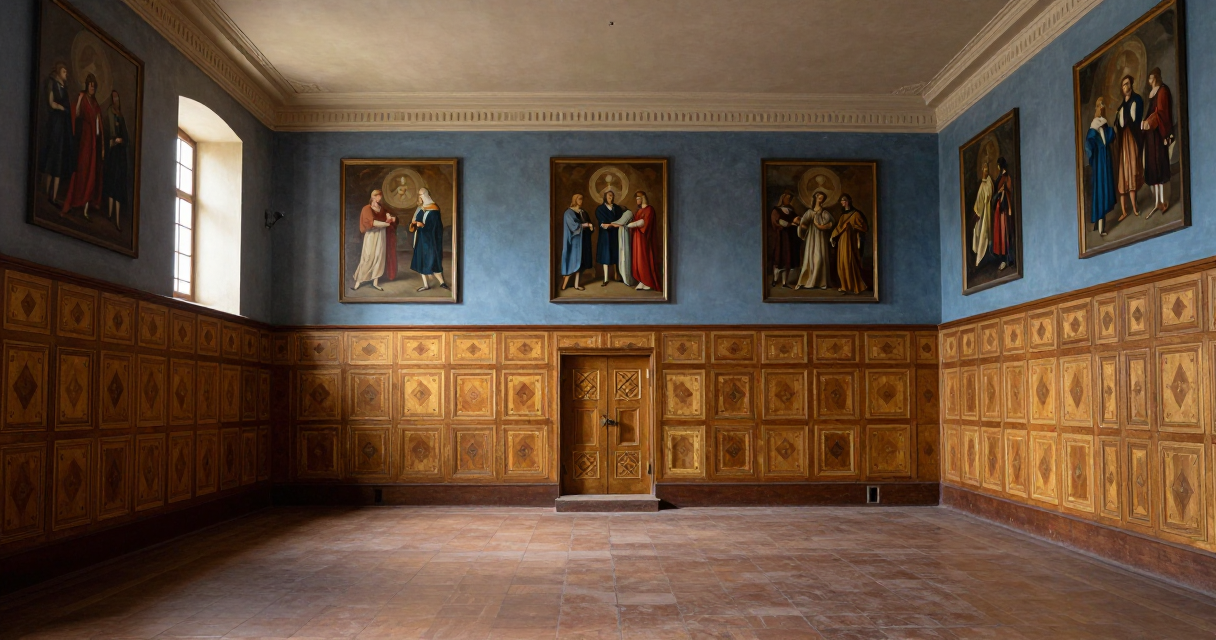
In the early 18th century, Freemasonry emerged as a brotherhood that combined ritual, symbolism, and intellectual pursuits, but it was the concept that defined its artistic development under the influence of the scientific revolution of the Enlightenment. Masonic Art as Intellectual Expression During this period, thinkers like Isaac Newton, Robert Boyle, and John Locke redefined the boundaries of human knowledge, replacing mystical explanations with empirical observation and mathematical precision. Masonic lodges, which functioned as both social clubs and centers of learning, absorbed these ideas and translated them into visual and architectural forms. The result was a body of Masonic art that reflected the era’s obsession with order, symmetry, and the hidden laws of nature. From geometric layouts of lodges to allegorical paintings on walls, the ideas of the Enlightenment not only influenced but became its structural foundation, embedding rationalism in every symbol and ritual. Masonic art and rationalism The Enlightenment saw significant advancements in the field of optics, particularly in the study of light and vision. Scientists like Christiaan Huygens and Robert Hooke explored how light behaved, leading to breakthroughs in lens-making and the development of the telescope and microscope.
The Scientific Method as a Masonic Aesthetic
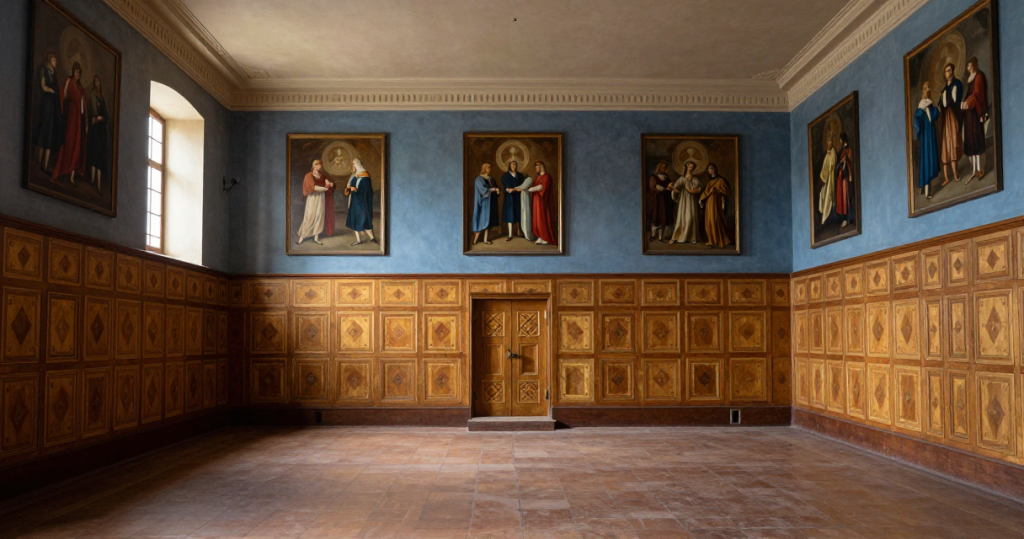
Enlightenment science introduced a systematic approach to understanding the universe, one that relied on measurement, classification, and repeatable experiments. This methodology found its way into Masonic art through the use of precise geometric patterns, which were believed to mirror the divine order of creation. Lodge rooms, for example, were often designed as perfect squares or rectangles, with the altar positioned at the center to symbolize the balance between heaven and earth. The compass and square, two of Freemasonry’s most recognizable tools, were not merely decorative but represented the application of mathematical principles to moral and spiritual development. Artists and architects working for Masonic lodges adopted these ideas, creating spaces that felt both sacred and scientifically rigorous.
The influence of the scientific method extended to Masonic iconography, where symbols were arranged in logical sequences to convey moral lessons. The “Ladder of Jacob,” for instance, was often depicted with seven rungs, each representing a virtue or step toward enlightenment. This mirrored the Enlightenment’s emphasis on progress and self-improvement, ideas that were central to both scientific inquiry and Masonic philosophy. Even the use of light in Masonic art, whether through stained glass windows or candle arrangements, was calculated to evoke the Enlightenment’s metaphor of knowledge as illumination. The result was an aesthetic that felt both ancient and modern, blending esoteric tradition with the clarity of empirical thought.
Newtonian Physics and the Architecture of Lodge Rooms
Isaac Newton’s laws of motion and universal gravitation provided a framework for understanding the cosmos as a machine governed by predictable forces. This mechanistic worldview deeply influenced Masonic architecture, where lodge rooms were designed to reflect the harmony of the universe. The floor of a Masonic lodge, known as the “checkered pavement,” consisted of alternating black and white tiles arranged in a grid, symbolizing the duality of existence, light and dark, good and evil, order and chaos. This pattern was not arbitrary but a deliberate nod to Newton’s belief in a universe governed by binary oppositions, yet held together by a single, unifying force.
The ceiling of a lodge room was often painted to resemble the night sky, with constellations mapped according to precise astronomical calculations. This was not mere decoration but a visual representation of Newton’s theory that the same laws governing the motion of planets also applied to earthly phenomena. Some lodges even incorporated orreries, mechanical models of the solar system, into their designs, reinforcing the idea that the universe operated like a clockwork mechanism. The use of symmetry in lodge architecture further emphasized this connection, as Newtonian physics relied on the idea of balance and equilibrium. These elements turned Masonic spaces into microcosms of the Enlightenment’s scientific ideals, where every detail served a dual purpose: spiritual enlightenment and intellectual rigor.
The Role of Optics and Perspective in Masonic Symbolism
In Masonic art, these scientific discoveries were reflected, where light became a central metaphor for knowledge and truth, demonstrating how the ideas of the Enlightenment shaped perceptions. Masonic art absorbed scientific discoveries Stained glass windows in lodge rooms, for example, were designed to refract light in specific ways, creating patterns that symbolized the journey from ignorance to enlightenment. The use of perspective in Masonic paintings also reflected the era’s fascination with optics, as artists employed techniques like vanishing points to create the illusion of depth and dimensionality.
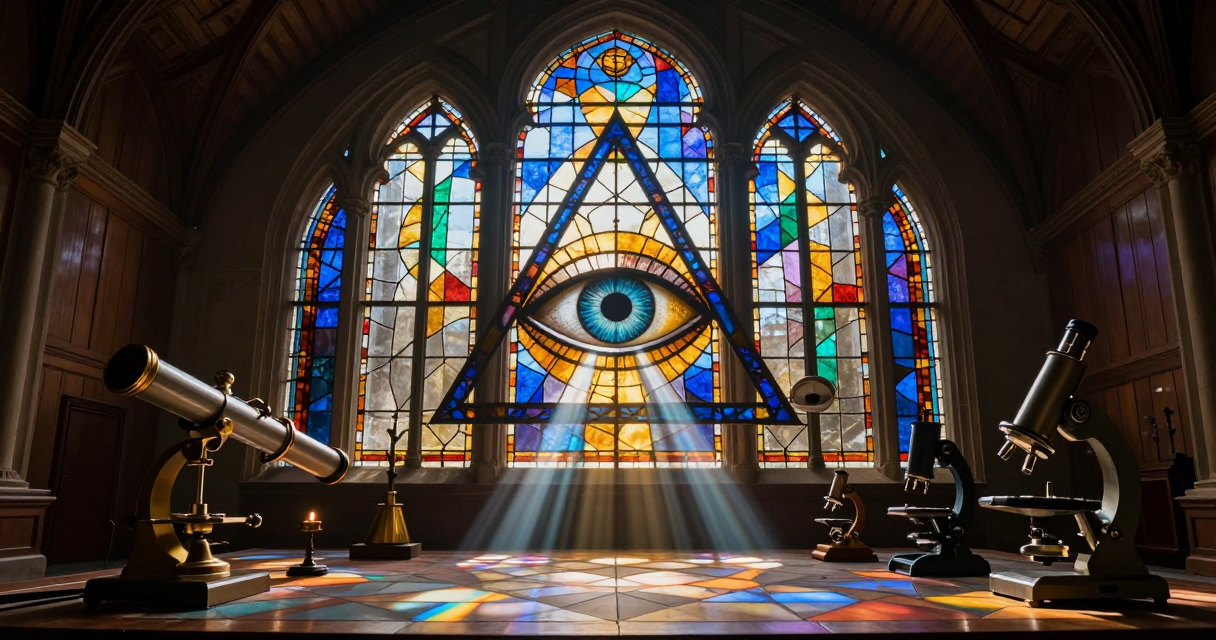
One of the most striking examples of this influence is the “All-Seeing Eye,” a symbol that appears in many Masonic lodges. This motif was not merely a spiritual emblem but a direct reference to the Enlightenment’s interest in vision and perception. The eye, often depicted within a triangle, represented the idea that the universe could be understood through observation and reason. Some lodges even incorporated optical illusions into their designs, such as anamorphic paintings that revealed hidden images when viewed from a specific angle. These techniques were not just artistic flourishes but demonstrations of the power of science to uncover hidden truths, a concept that resonated deeply with Masonic philosophy.
The study of optics also influenced the way Masonic rituals were performed. Candles, mirrors, and prisms were used to manipulate light, creating an atmosphere that was both mystical and scientifically precise. The use of light in these ceremonies was not random but carefully calculated to evoke specific emotional and intellectual responses. This fusion of art and science turned Masonic rituals into a form of experiential learning, where participants were encouraged to see the world through the lens of reason and observation.
Botany, Zoology, and the Masonic Garden of Symbols
The Enlightenment was a golden age for the natural sciences, with figures like Carl Linnaeus revolutionizing the classification of plants and animals. Masonic art absorbed this taxonomic impulse, turning botanical and zoological motifs into symbols of moral and spiritual growth. Lodge rooms often featured depictions of plants and animals arranged in hierarchical order, mirroring Linnaean taxonomy. The acacia tree, for example, was a recurring symbol in Masonic art, representing immortality and resilience. Its use was not merely decorative but a reference to the Enlightenment’s belief in the interconnectedness of all living things, a concept that aligned with Masonic ideals of universal brotherhood.
Animals also played a significant role in Masonic symbolism, with each creature representing a specific virtue or lesson. The bee, for instance, symbolized industry and cooperation, while the lion represented strength and courage. These symbols were not chosen arbitrarily but reflected the Enlightenment’s fascination with the natural world as a source of moral instruction. Some lodges even maintained gardens or incorporated botanical motifs into their architecture, creating spaces that felt like living encyclopedias of natural history. The use of these symbols was not just artistic but educational, reinforcing the idea that science and spirituality were two sides of the same coin.
The influence of botany and zoology extended to Masonic rituals, where participants were often given symbolic “seeds” or “plants” to nurture as part of their spiritual journey. These rituals were designed to teach the principles of growth and transformation, ideas that were central to both Enlightenment science and Masonic philosophy. The result was an artistic tradition that blurred the line between the natural and the symbolic, turning lodge rooms into living laboratories of moral and scientific inquiry.
Alchemy and Chemistry in Masonic Ritual Imagery
Alchemy, though often dismissed as a pseudoscience, played a crucial role in the development of modern chemistry during the Enlightenment. Figures like Robert Boyle and Antoine Lavoisier built on alchemical traditions, transforming them into rigorous scientific disciplines. Masonic art absorbed these ideas, using alchemical symbols to represent spiritual transformation. The “Philosopher’s Stone,” for example, was a recurring motif in Masonic imagery, symbolizing the purification of the soul. This was not a literal reference to alchemy but a metaphor for the Enlightenment’s belief in progress and self-improvement, ideas that were central to Masonic philosophy.
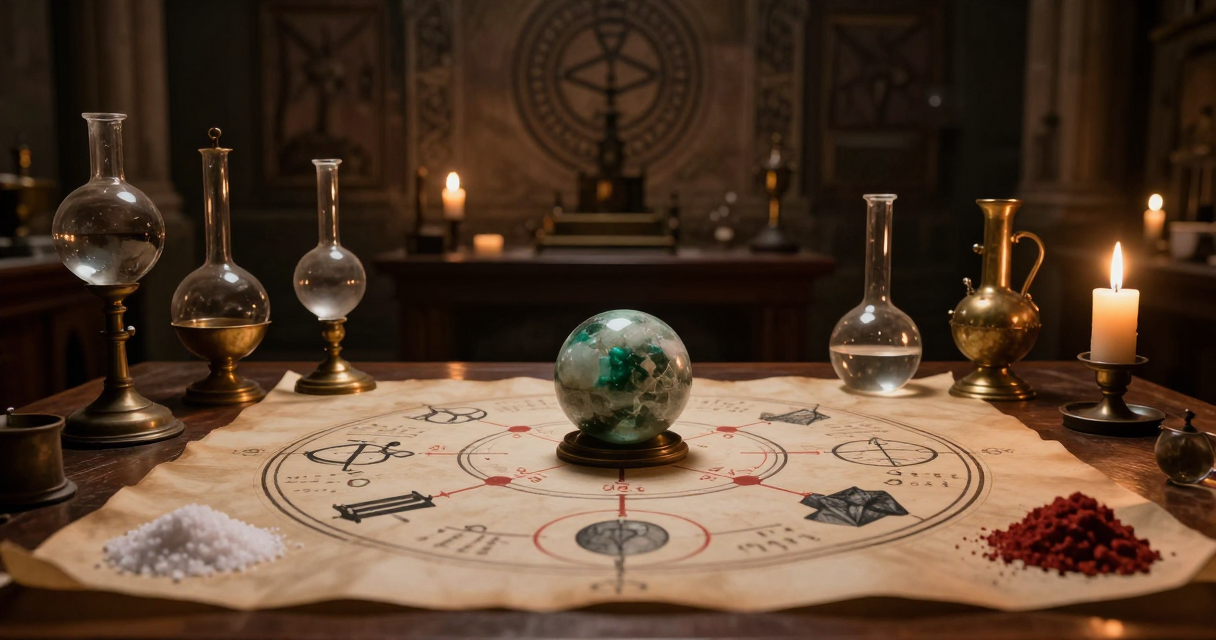
The use of chemical symbols in Masonic art extended to the depiction of elements like sulfur, mercury, and salt, each representing different aspects of the human experience. Sulfur, for instance, symbolized passion and energy, while mercury represented adaptability and transformation. These symbols were often arranged in complex diagrams, mirroring the alchemical process of transmutation. Some lodges even incorporated chemical experiments into their rituals, using fire, water, and other elements to create dramatic visual effects. These performances were not just theatrical but educational, reinforcing the idea that science and spirituality were intertwined.
The influence of alchemy and chemistry can also be seen in the materials used in Masonic art. Metals like gold and silver were often incorporated into lodge decorations, symbolizing purity and enlightenment. The use of these materials was not merely decorative but a reference to the alchemical belief in the transmutation of base metals into gold, a metaphor for the transformation of the human soul. This fusion of art and science turned Masonic lodges into spaces where the boundaries between the material and the spiritual were deliberately blurred, creating an atmosphere of both mystery and intellectual rigor.
The Legacy of Enlightenment Science in Modern Masonic Art
The influence of Enlightenment science on Masonic art did not end with the 18th century but continued to shape the fraternity’s visual and architectural traditions well into the modern era. Many of the symbols and motifs introduced during this period remain central to Masonic iconography today, serving as a bridge between the scientific revolutions of the past and contemporary artistic practices. The use of geometric patterns, for example, has evolved into more abstract forms, but the underlying principles of symmetry and balance remain unchanged. Modern Masonic lodges often incorporate digital projections and interactive displays, but these innovations are built on the same foundation of scientific inquiry that defined Enlightenment-era art.
The legacy of Enlightenment science can also be seen in the way Masonic art engages with contemporary scientific ideas. The discovery of quantum physics, for instance, has inspired new interpretations of Masonic symbols, with some artists exploring the idea of parallel universes and the interconnectedness of all things. This willingness to adapt and evolve reflects the Enlightenment’s spirit of intellectual curiosity, a value that remains central to Freemasonry. Even the materials used in modern Masonic art, such as LED lighting and sustainable building practices, reflect the era’s commitment to innovation and progress.
The enduring influence of Enlightenment science on Masonic art is a testament to the fraternity’s ability to absorb and reinterpret new ideas. While the symbols and motifs may have evolved, the core principles of reason, observation, and intellectual rigor remain unchanged. This fusion of art and science continues to define Masonic aesthetics, creating a tradition that is both timeless and deeply rooted in the intellectual currents of the Enlightenment. The result is a body of work that feels both ancient and modern, a living testament to the power of science to shape artistic expression.

I have spent the past decade exploring the intersections of Freemasonry, art, and science, researching historic manuscripts and architectural symbolism. My work as a freelance writer and independent researcher allows me to share the rich history of knowledge that these traditions embody.