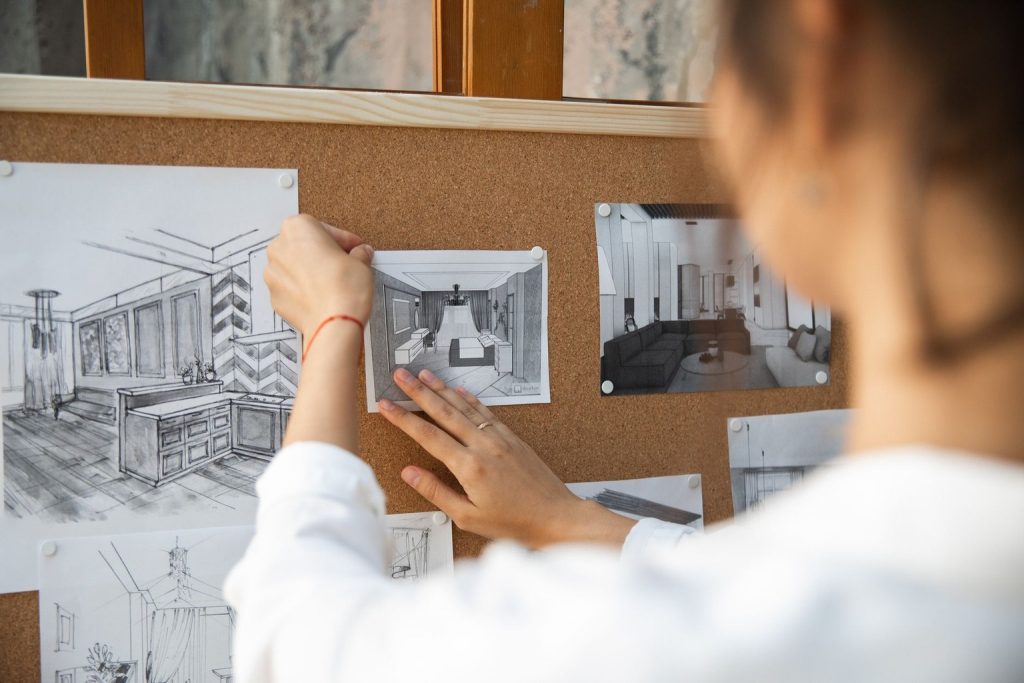
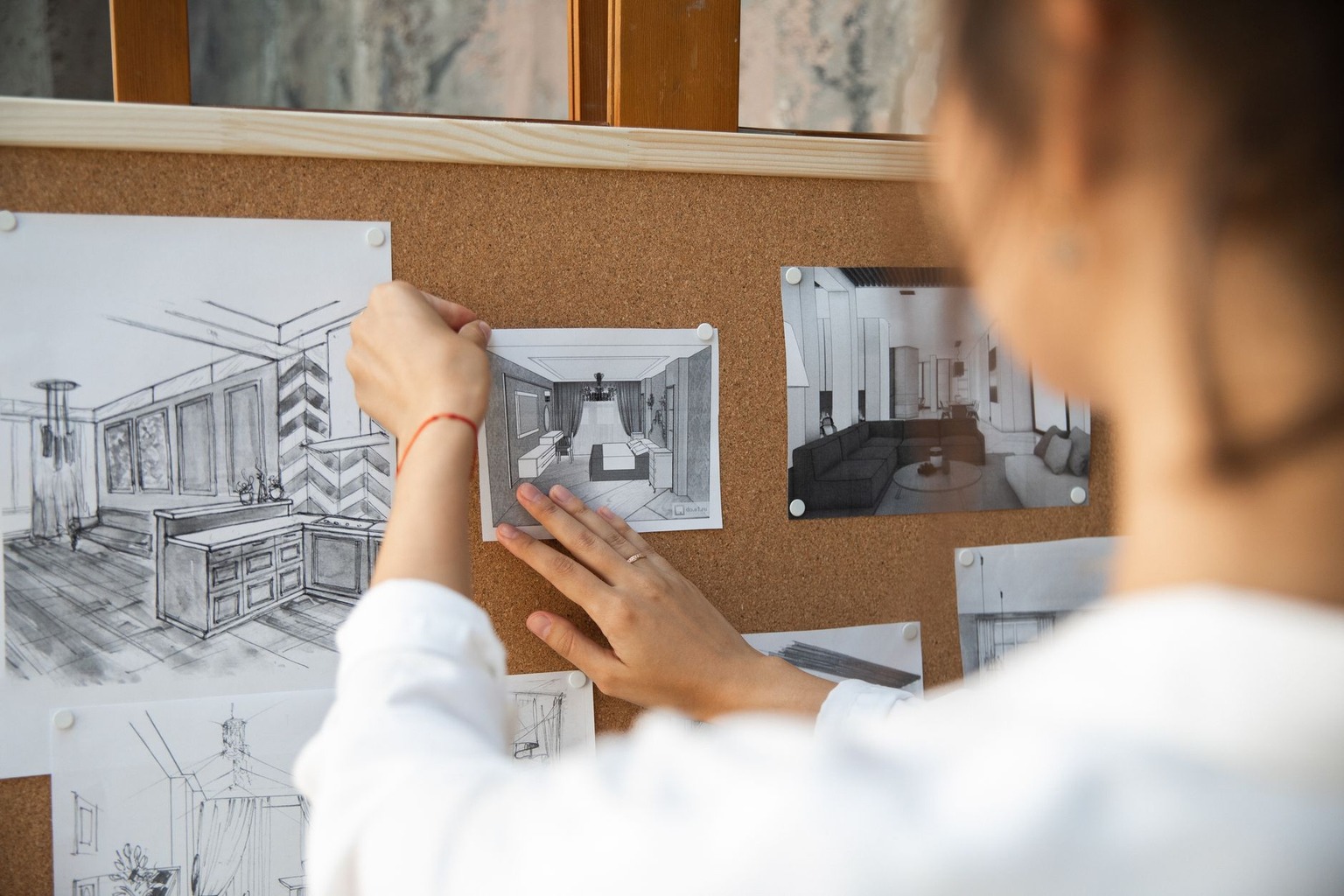
Linear perspective is the geometric system that allows a flat surface to simulate three-dimensional depth by converging parallel lines toward a single vanishing point. This technique fundamentally altered how visual space was constructed in Western art, shifting the focus from symbolic arrangement to optical realism. Understanding the history of perspective in art reveals how mathematical principles were applied to canvas and wall, creating a consistent language for spatial representation that persists in modern design and architecture.
Geometric Foundations of Single-Point Systems
The core mechanism relies on the observation that parallel lines appear to converge at infinity. Artists formalized this into a grid system where all horizontal lines receding from the viewer meet at one specific spot on the horizon line. This vanishing point acts as the anchor for the entire composition, dictating the scale of objects based on their distance from that focal area. By calculating these intersections precisely, painters could render rooms, streets, and landscapes with a convincing sense of depth that mimics human binocular vision.
This geometric rigor required a shift from intuitive drawing to calculated placement. Each object in the scene had to be scaled according to its position relative to the vanishing point, ensuring that larger items appeared closer and smaller items seemed further away. The horizon line itself represented the eye level of the hypothetical viewer, grounding the image in a specific physical perspective. This mathematical approach turned painting into an exercise in spatial logic rather than just aesthetic arrangement.
The precision of this system also introduced strict constraints on composition. Artists had to decide where to place the vanishing point to control the viewer’s attention and emotional response. A central placement creates stability and formality, while an off-center position introduces dynamism and tension. These choices demonstrate that perspective is not merely a technical tool but a narrative device that guides how we interpret the spatial relationships within a work of art.
Albrecht Durer’s Mathematical Codification
While Italian Renaissance masters pioneered the use of linear perspective, Albrecht Durer provided the first comprehensive theoretical framework for its application. His treatise systematically explained how to translate three-dimensional objects into two-dimensional projections using geometric constructions. This codification allowed artists to replicate the effects of perspective without relying solely on empirical observation or trial and error in the studio. Durer’s work bridged the gap between artistic practice and mathematical theory, making the techniques accessible to a wider audience of craftsmen and painters.
Durer’s approach emphasized the use of grids and projection lines to map complex forms accurately. He demonstrated how to construct cubes, spheres, and architectural elements by breaking them down into simpler geometric shapes. This methodological clarity ensured that the spatial relationships remained consistent across different parts of the composition. His writings also addressed the importance of proportion and scale, reinforcing the idea that visual truth depends on accurate measurement rather than subjective impression.
The influence of Durer’s theoretical work extended far beyond his immediate circle, shaping artistic education in Northern Europe for generations. By providing a clear set of rules, he enabled artists to experiment with complex compositions while maintaining spatial coherence. This standardization helped establish perspective as a fundamental component of Western visual culture, embedding geometric logic into the very definition of realistic representation. His legacy lies in transforming perspective from an intuitive skill into a teachable discipline.
Optical Illusions and Visual Perception
Human vision processes spatial cues through a combination of monocular and binocular depth signals. Linear perspective primarily engages monocular cues such as relative size, occlusion, and convergence to create the illusion of depth on a flat surface. The brain interprets these geometric signals automatically, constructing a three-dimensional mental model from two-dimensional inputs. This cognitive process explains why well-executed perspective drawings can feel immersive, triggering spatial recognition pathways similar to those activated by real-world scenes.
On Sonya Castro’s channel, they cover the evolution of artistic techniques — you can watch Linear Perspective in Renaissance Art right here.

The effectiveness of perspective also depends on the viewer’s familiarity with the depicted environment. Recognizable objects like buildings or furniture provide contextual anchors that help the brain calibrate distances and scales. When these cues align with geometric principles, the illusion becomes more convincing and less likely to be perceived as a trick. However, if the geometry contradicts the expected proportions of familiar objects, the visual system may struggle to integrate the conflicting signals, resulting in a sense of disorientation or discomfort.
Artists have long exploited these perceptual mechanisms to manipulate spatial perception beyond strict geometric accuracy. By slightly exaggerating or distorting perspective lines, they can create dramatic effects that enhance emotional impact without breaking the illusion entirely. This flexibility allows for expressive variations that prioritize narrative or mood over optical precision. The interplay between mathematical structure and perceptual psychology remains a central theme in the study of how we interpret visual space.
Architectural Integration in Renaissance Works
The application of perspective in architecture within paintings served both aesthetic and symbolic purposes during the Renaissance. Artists like Filippo Brunelleschi demonstrated the system’s power by creating drawings that aligned with real-world structures, proving that the technique could replicate actual spatial experiences. This integration blurred the line between painted illusion and physical reality, inviting viewers to engage with the artwork as a window into a constructed world. The use of architectural frameworks provided a stable grid upon which figures and objects could be arranged with precise spatial relationships.
In works such as Leonardo da Vinci’s Last Supper, the geometry of the room directs the viewer’s gaze toward the central figure. The converging lines of the ceiling beams and wall panels all point to a specific vanishing point located behind the main subject, emphasizing his importance within the composition. This structural control ensures that the spatial depth supports the narrative focus, making the architecture an active participant in the storytelling process rather than a passive background element.
The reliance on architectural perspective also reflected broader cultural values regarding order and harmony. The Renaissance fascination with classical antiquity found expression in the use of symmetrical layouts and proportional systems that echoed ancient Roman engineering. By embedding these structures into their paintings, artists communicated ideals of rationality and balance that were central to the intellectual climate of the time. The spatial arrangement became a visual metaphor for the structured understanding of the world that characterized this period.
Multi-Point Variations and Spatial Complexity
As artistic techniques evolved, painters began exploring multi-point perspective systems to capture more dynamic and varied viewpoints. Two-point and three-point perspectives allowed for the depiction of objects seen from corners or extreme angles, breaking away from the static frontality of single-point compositions. These variations introduced greater complexity in rendering shadows, reflections, and structural details, requiring artists to manage multiple sets of converging lines simultaneously. The result was a more flexible approach to spatial representation that could accommodate irregular shapes and non-orthogonal orientations.

The transition to multi-point systems also influenced the way artists composed scenes with overlapping forms and varied depths. By shifting the vanishing points, they could create a sense of movement and instability that resonated with contemporary interests in naturalism and observation. This technical expansion enabled the depiction of crowded streets, chaotic interiors, and expansive landscapes with a richness of detail that single-point perspective alone could not achieve. The flexibility of these systems allowed for greater artistic freedom while maintaining geometric consistency.
However, multi-point perspective presented challenges in terms of visual clarity and coherence. Managing multiple vanishing points required careful planning to avoid conflicting spatial cues that might confuse the viewer. Artists had to balance the complexity of the geometry with the need for a clear focal point and readable composition. This tension between technical accuracy and communicative effectiveness drove ongoing experimentation and refinement in the development of spatial representation techniques.
Modern Adaptations and Digital Continuity
The principles established in the history of perspective in art continue to underpin modern digital rendering and computer graphics. Software algorithms used in 3D modeling rely on the same geometric transformations that Renaissance artists applied manually, projecting three-dimensional coordinates onto a two-dimensional screen. This continuity demonstrates the enduring relevance of linear perspective as a foundational tool for visual communication across centuries. The shift from manual calculation to automated processing has expanded the possibilities for complex scenes while preserving the core logic of spatial projection.
In digital environments, perspective can be manipulated in real time, allowing users to navigate virtual spaces with fluid changes in viewpoint and scale. This interactivity introduces new dimensions to the concept of perspective, where the viewer is no longer a passive observer but an active participant in shaping the visual experience. The ability to zoom, rotate, and pan through a scene challenges static compositional norms and invites a more exploratory engagement with spatial content. This evolution reflects broader trends toward immersive and interactive media in contemporary culture.
Despite these technological advances, the fundamental goal of creating convincing spatial depth remains unchanged. Whether on a canvas or a computer screen, the success of perspective depends on its ability to align with human perceptual expectations. Artists and designers continue to draw on centuries of accumulated knowledge to craft visuals that feel intuitive and believable. The ongoing dialogue between traditional techniques and modern tools ensures that perspective remains a vital component of visual art and design practice.

I have spent the past decade exploring the intersections of Freemasonry, art, and science, researching historic manuscripts and architectural symbolism. My work as a freelance writer and independent researcher allows me to share the rich history of knowledge that these traditions embody.